In today’s fast-paced work environment, stress has become a common challenge for professionals across industries. From tight deadlines and overflowing inboxes to constant multitasking, managing work stress is crucial for maintaining productivity, focus, and mental well-being. While there are many strategies to reduce stress, AI tools like ChatGPT can provide practical support, actionable advice, and even emotional relief—if used with the right prompts.
Using well-crafted prompts ensures that AI generates targeted, helpful, and personalized guidance, rather than generic or irrelevant responses. In this article, we’ve selected five powerful ChatGPT prompts to help you reduce work stress, each explained in detail to maximize effectiveness.
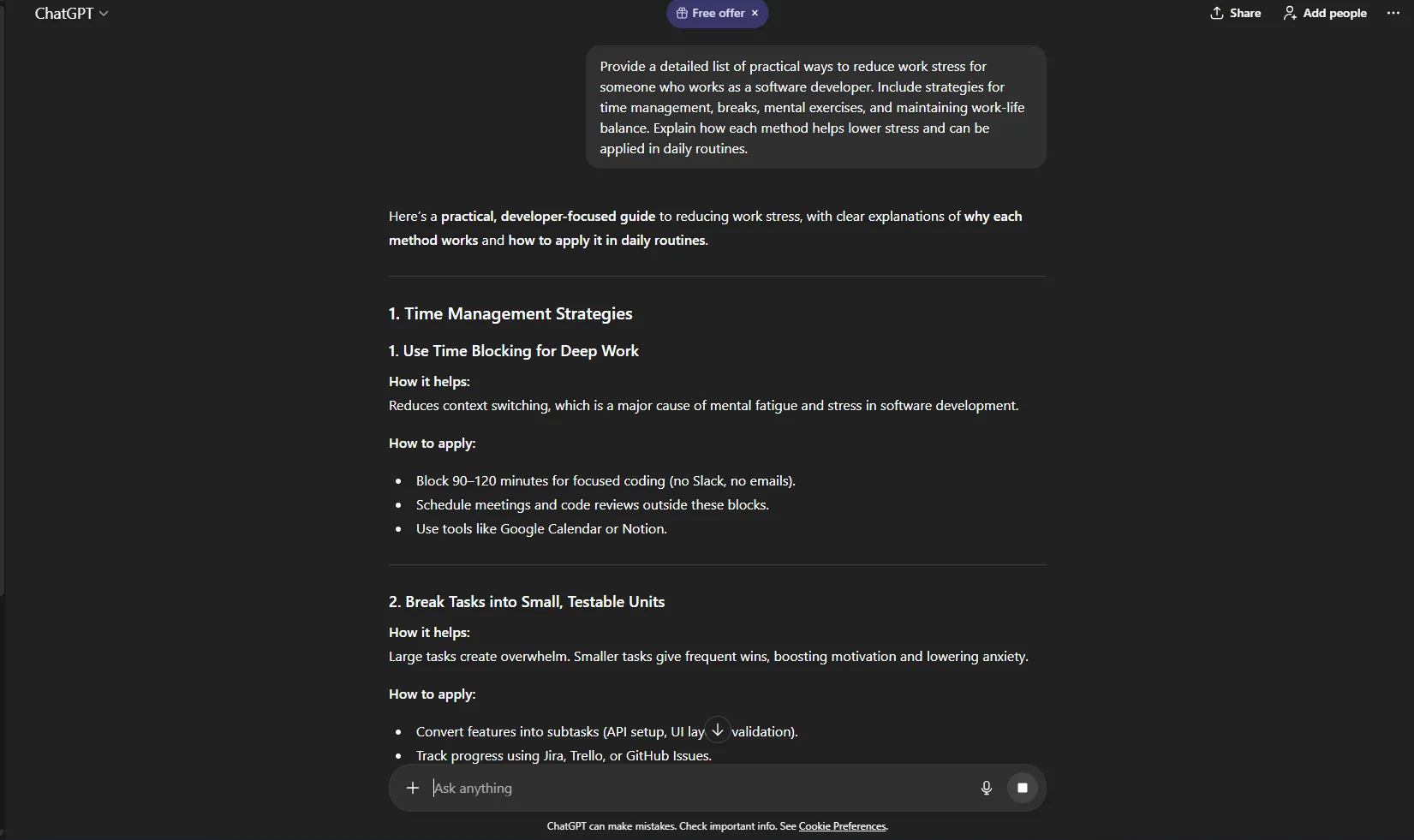
Generate Practical Stress-Reduction Tips
Sometimes, you just need concrete actions you can implement immediately. This prompt helps you create a personalized list of practical strategies to manage work stress.
Prompt:
“Provide a detailed list of practical ways to reduce work stress for someone who works in [industry/job role]. Include strategies for time management, breaks, mental exercises, and maintaining work-life balance. Explain how each method helps lower stress and can be applied in daily routines.”
This prompt works well for daily routines, productivity planning, and creating actionable checklists that directly reduce stress.
Create a Mindfulness or Relaxation Routine
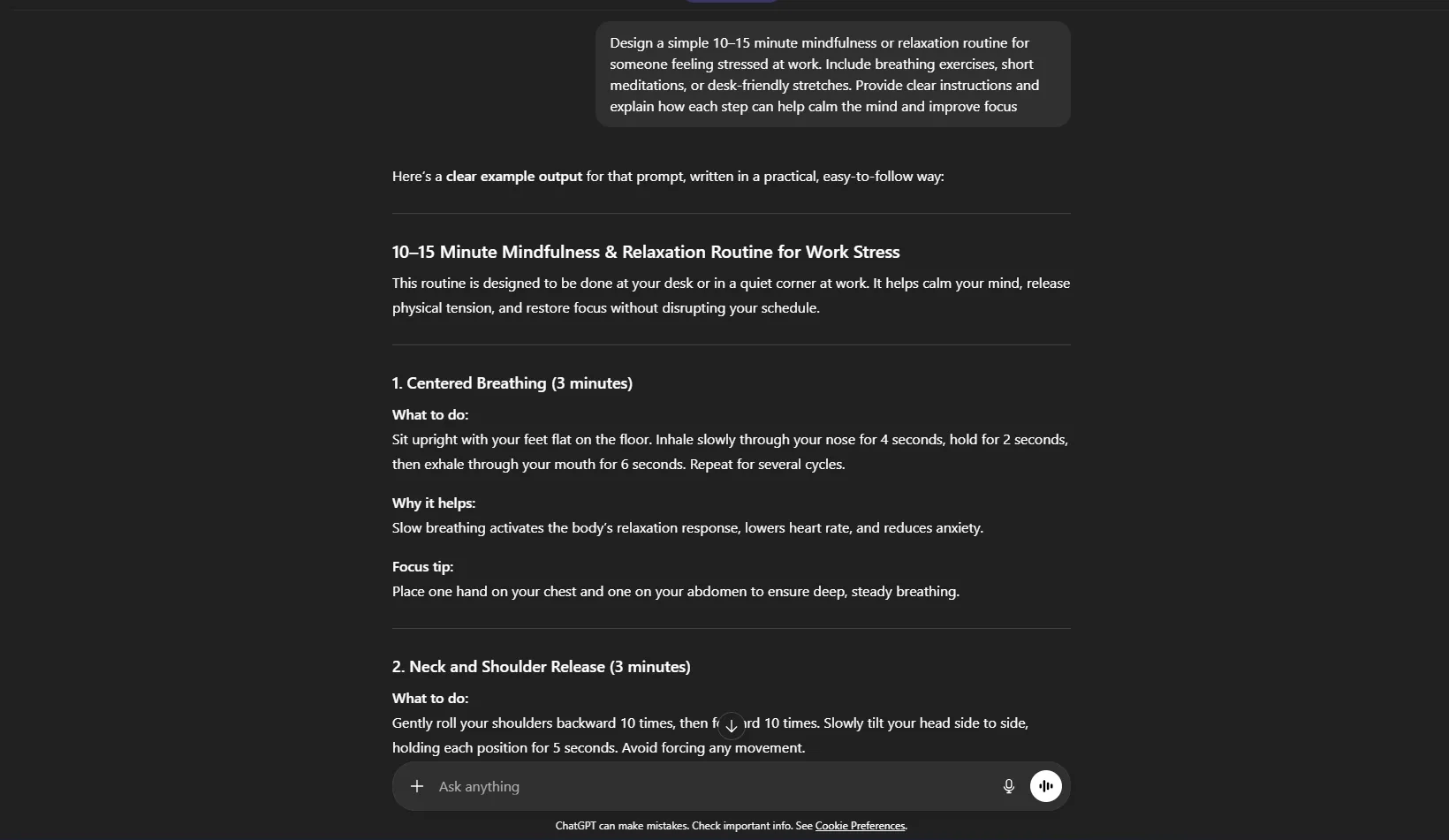
Mindfulness and relaxation techniques are scientifically proven to reduce stress. This prompt guides ChatGPT to craft step-by-step routines suitable for busy professionals.
Prompt:
“Design a simple 10–15 minute mindfulness or relaxation routine for someone feeling stressed at work. Include breathing exercises, short meditations, or desk-friendly stretches. Provide clear instructions and explain how each step can help calm the mind and improve focus.”
Use this for daily self-care, breaks during work hours, or as part of a mental wellness plan.
Draft Stress-Relief Reminders and Affirmations
Positive reinforcement and small reminders can help shift your mindset and reduce anxiety during hectic days.
Prompt:
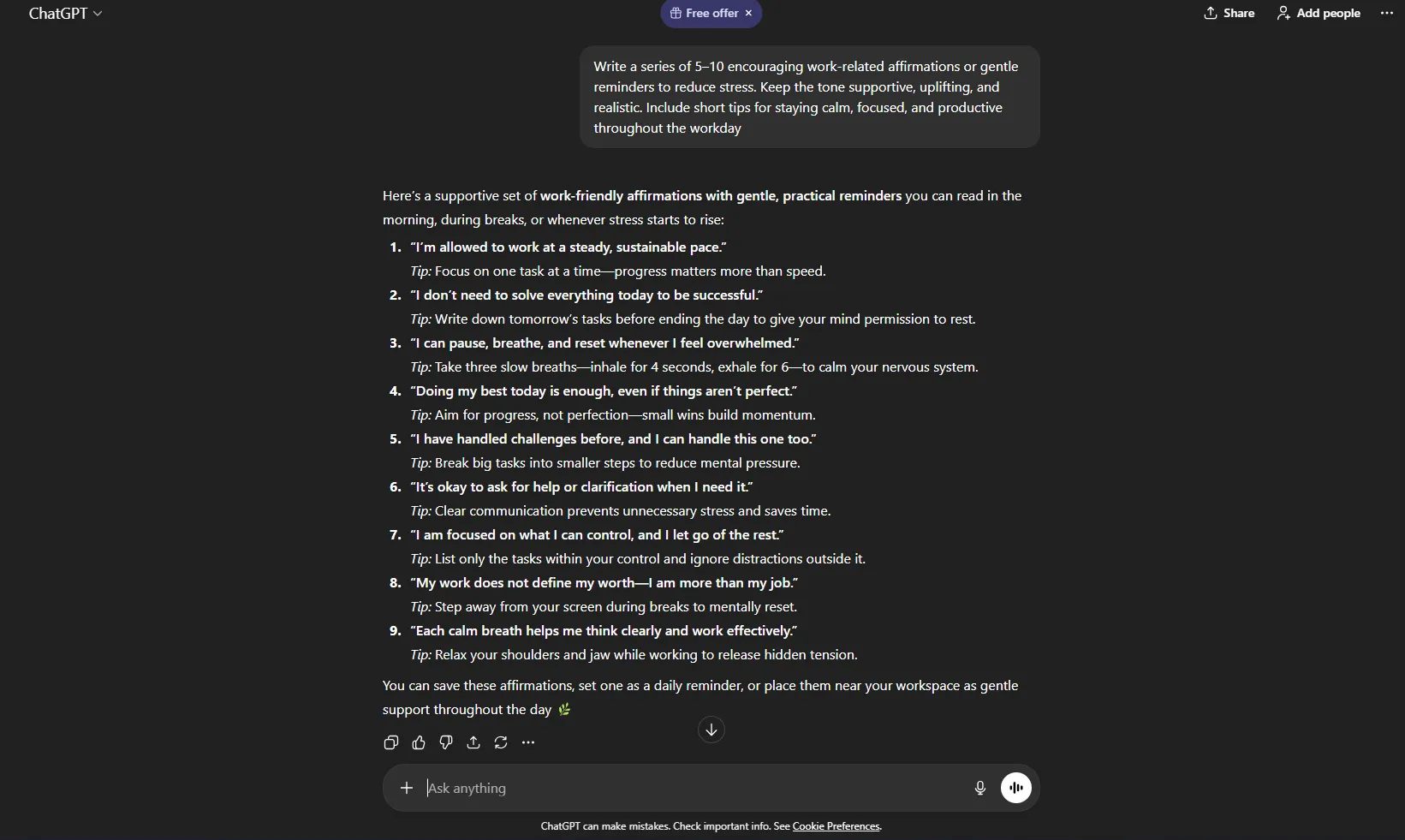
“Write a series of 5–10 encouraging work-related affirmations or gentle reminders to reduce stress. Keep the tone supportive, uplifting, and realistic. Include short tips for staying calm, focused, and productive throughout the workday.”
This prompt is ideal for creating personal notes, phone reminders, or desktop pop-ups to help you stay grounded and stress-free.
Plan Time Management Strategies
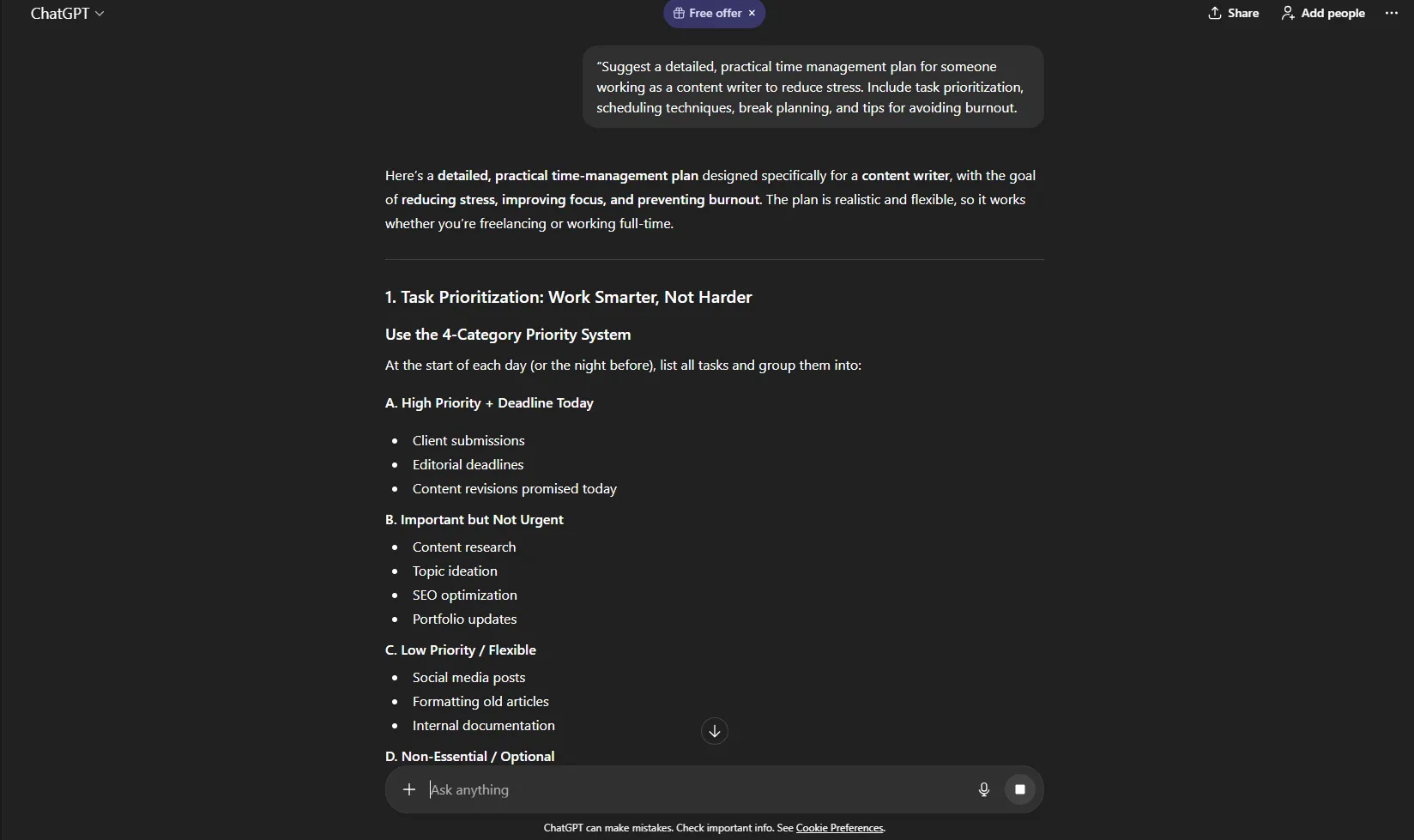
A big source of work stress is poor time management. This prompt allows ChatGPT to provide structured solutions tailored to your schedule and workload.
Prompt:
“Suggest a detailed, practical time management plan for someone working in [industry/job role] to reduce stress. Include task prioritization, scheduling techniques, break planning, and tips for avoiding burnout. Explain why each step is effective for improving focus and reducing work pressure.”
Use this for creating daily or weekly schedules that help you stay organized, proactive, and less stressed.
Offer Mental Health Insights and Coping Techniques
Understanding stress and its impact can empower you to manage it better. This prompt encourages AI to explain stress triggers and coping strategies in a clear, supportive way.
Prompt:
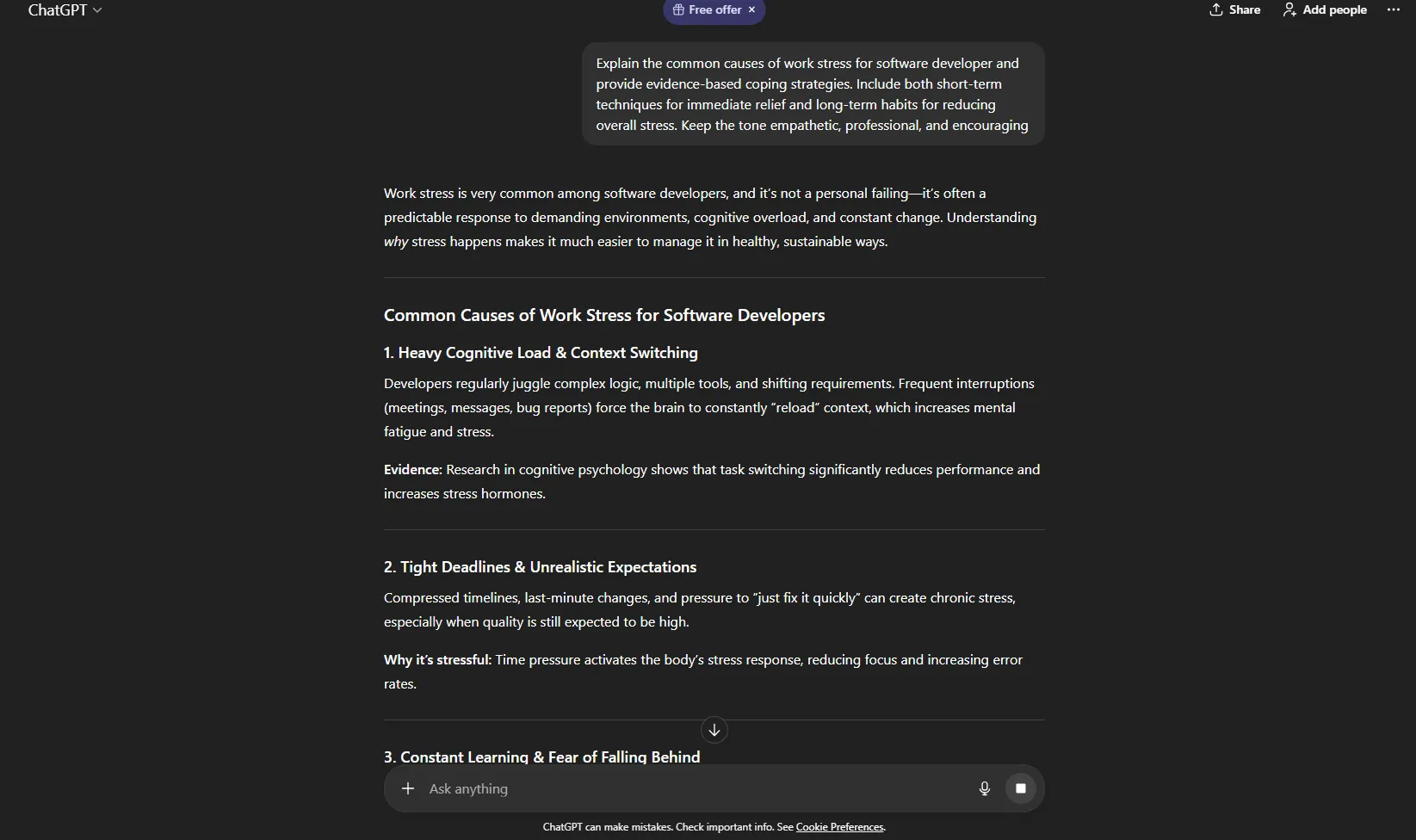
“Explain the common causes of work stress for [job role/industry] and provide evidence-based coping strategies. Include both short-term techniques for immediate relief and long-term habits for reducing overall stress. Keep the tone empathetic, professional, and encouraging.”
This prompt is perfect for learning more about stress management, building awareness, and creating a sustainable mental wellness plan.
Conclusion
Reducing work stress doesn’t have to be complicated. By using a small set of carefully designed ChatGPT prompts, you can access practical tips, mindful routines, affirmations, time management advice, and expert-backed strategies in a personalized, actionable format.
Remember: AI can guide, remind, and suggest, but your active participation—implementing routines, following advice, and adjusting strategies—makes the difference. These prompts provide the foundation, and your consistent application will help you maintain focus, productivity, and well-being in the workplace.