
If you’ve ever tried managing your own finances, you already know it starts off simple but doesn’t stay that way for long. At first, it’s just a few entries, maybe one spreadsheet, nothing too serious. But then things slowly pile up. More transactions, more tracking… and suddenly you’re spending way more time on it than you expected.
And honestly, it’s not even the complexity that gets frustrating it’s the repetition. Doing the same work again and again, fixing small mistakes, double-checking numbers. That’s where AI SaaS tools are quietly changing things. They take care of the boring parts so you can focus on decisions that actually matter.
why choose Top 5 AI SaaS Tools for Finance & Accounting
Selecting appropriate AI SaaS platforms for finance and accounting has little do with following what's trendy and much more to do with reducing friction of everyday work activities (many of which are inherently repetitive in nature - data entry, reconciling transactions, reporting).
In addition , as a result of their power, these AI SaaS platforms provide users with accurate records. A common reason for erroneous financial statements is the result of only minor variances in an account; this may have dire consequences with respect to compliance or executive decision making.
These technologies allow financial data to be more easily interpreted than before. It was previously thought that you’d have to have an advanced knowledge of finance to understand your finances. Now there are multiple ways to get this information quickly without requiring you to sift through spreadsheets or have extensive financial background knowledge such as automated reporting, forecast reports and even chat queries. As a result, more business owners, freelancers, and teams are able to make more timely and better decisions.
Scalability is also a secondary benefit with regards to these technologies. As businesses grow, manual processes generally begin to fail or become unmanageable. AI SaaS-based financial solutions continuously adapt to keep pace with business growth and can support a larger volume of transactions as well as capture additional data. Ultimately these types of solutions will save time and provide a more streamlined, effective process as companies grow and change over time.
LayerNext - Best for Autonomous Bookkeeping
Bookkeeping is one of those things that people know is important… but still keep delaying. It’s not exciting work, and it takes consistency. Miss a few entries, and suddenly everything feels messy. LayerNext tries to fix that problem by taking over most of the repetitive work. Once you connect your accounts, it starts organizing transactions on its own. Over time, it even improves based on patterns, which makes things smoother.
Why LayerNext Is Useful
You get a system that does most of it for you, instead of spending hours updating records. It saves manual work and prevents consistency issues, the typical place where errors tend to occur.
Key Features
- Automatic transaction categorization
- Real-time reconciliation
- AI-based error detection
- Bank integrations
- Minimal manual work
Pros
- Saves time daily
- Reduces manual errors
- Easy to use
- Works in background
Cons
- Setup takes time
- Not perfect for complex cases
- Limited customization
.webp) layernext.ai
layernext.ai
ChatFin AI - Best for Finance Operations
Not everyone enjoys going through financial reports. Sometimes, you just want a quick answer instead of opening multiple dashboards and trying to figure things out. ChatFin AI works more like a conversation. You ask questions, and it gives you insights in simple language. It removes that extra step of digging through data manually.
Why ChatFin AI Is Useful
It speeds up decision-making. Instead of spending time analyzing, you get direct answers. This is especially helpful if you’re not from a finance background.
Key Features
- Chat-based queries
- Instant insights
- Cash flow analysis
- Smart reporting
- Easy interface
Pros
- Very simple to use
- Saves time
- Easy understanding
- Works for non-finance users
Cons
- Limited for complex queries
- Data quality matters
- Advanced features cost more
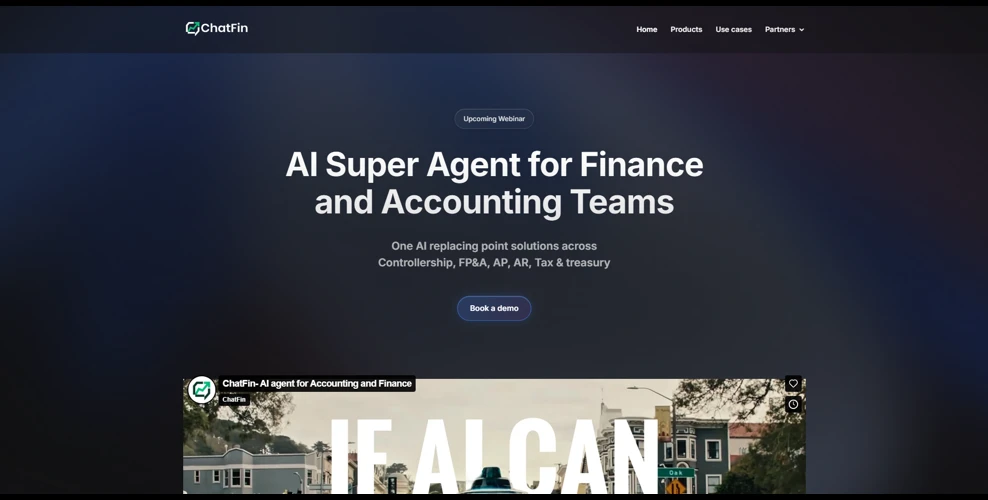 chatfin.ai
Datarails Genius - Best for Planning and Excel
If you’ve been using Excel for years, switching tools can feel unnecessary. Most people don’t want to learn something completely new just for financial planning. Datarails understands that. You keep your workflow, but add smarter features on top of it.
Why Datarails Genius Is Useful
It allows for better planning without requiring you to alter your system. You don’t have to start from scratch, so forecasting, budgeting, and reporting get a lot easier.
Key Features
- Excel integration
- Forecasting tools
- Budget planning
- Automated reports
- Data consolidation
Pros
- Familiar environment
- Strong planning tools
- Better collaboration
- Organized data
Cons
- Learning curve
- Setup takes effort
- Higher pricing
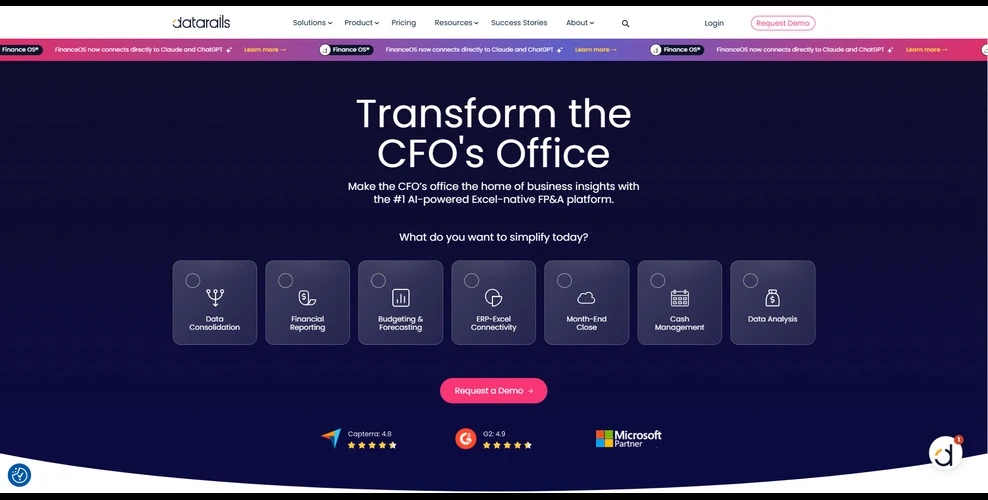 datarails.com
Vidur AI - Best for Indian Tax and Compliance
Tax and compliance work in India isn’t something you can ignore. Deadlines, rules, updates it all needs attention, and missing something can cause issues later. Vidur AI is designed to handle exactly that. It focuses on simplifying GST filing and compliance tracking, which can otherwise feel overwhelming.
Why Vidur A Is Useful
It reduces the stress of keeping up with regulations. Instead of manually checking everything, the tool helps you stay updated and organized.
Key Features
- GST automation
- Compliance tracking
- Alerts & reminders
- Tax calculations
- Regulatory updates
Pros
- Built for India
- Saves time
- Reduces compliance stress
- Keeps you updated
Cons
- Not global
- UI can improve
- May feel heavy for small users
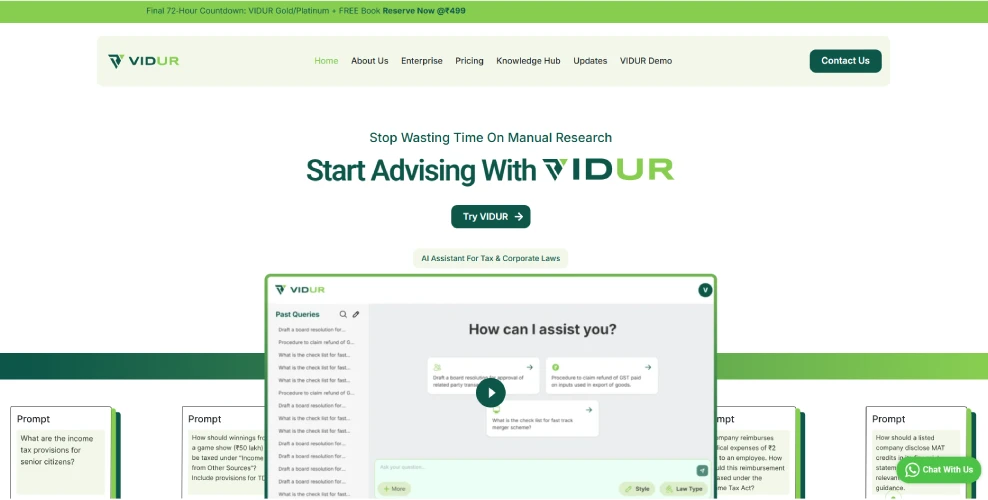 vidur.in
Ramp - Best for Expense Management
Outlays often don’t look like a lot when considered by themselves. But little things add up over time, and it’s useful to track them properly. Ramp helps manage that by keeping everything visible and structured. It gives you a clearer idea of where your money is going.
Why Ramp Is Useful
It aids in curbing spending and sidestepping avoidable expenses. This is especially useful when multiple people are sharing expenses.
Key Features
- Real-time tracking
- Automated approvals
- Spend insights
- Budget controls
- Receipt management
Pros
- Clear visibility
- Cost-saving insights
- Easy to use
- Scalable
Cons
- Advanced for solo users
- Regional limits
- Learning time required
 ramp.com
Comparison Table
| Tool Name | Main Use Case | Ease of Use | Best For | Pricing Level |
|---|---|---|---|---|
| LayerNext | Bookkeeping Automation | Easy | Freelancers, Startups | Medium |
| ChatFin AI | Finance Insights | Very Easy | Teams, Founders | Medium-High |
| Datarails | Planning & Forecasting | Medium | Large Teams | High |
| Vidur AI | Tax & Compliance | Easy | Indian Businesses | Medium |
| Ramp | Expense Management | Easy | Growing Companies | Medium |
Conclusion
Ultimately, the practical application of AI SaaS tools in finance and accounting has little to do with artificial intelligence itself. They work through tedious, repeatable tasks, prevent errors, and provide sharper insights without making your workflows more complex. Instead of being bombarded with sheer numbers and constant updates, you receive a system that operates quietly in the background and constantly pushes everything in orientation.
What makes these tools so useful is how they adapt to different needs whether bookkeeping, expense tracking/planning or compliance. You don’t need to embrace everything all at once. If you start with one tool that solves your biggest problem, it can make a significant difference already and from there on you can build on top of that as necessary.
The growing complexity of financial management does not suit the manual process anymore. The AI-driven solutions help you manage your organisation, take more informed and improved decisions and grow without having to deal with stress. In the long-term, it’s not just saving time it’s building a more robust and trouble-free way to manage your finances.