These days, people want more from companies online. Long gone is the time when mass ads reached everyone the same way. Now, shoppers look for interactions that match what they care about, right when it matters. A brand must notice individual choices, predict what comes next, yet deliver something useful each step along the way.
Here’s when tools driven by artificial intelligence step in. Instead of guessing, companies now shape interactions using smart systems that learn from user behavior. These systems track what people do, spot patterns, then adjust responses without constant human input. Product picks on shopping sites appear based on past clicks, not random choices. Emails change their content depending on who opens them. Websites rearrange layouts the moment someone visits. Timing matters - messages show up just as interest peaks. Machines handle the flow so outreach feels natural, almost intuitive.
Picture this - five smart tools powered by artificial intelligence that shape how customers feel seen. Each one tweaks its approach depending on what people do, say, or skip online. One stands out because it learns fast without needing heavy setup. Another reshapes messages based on mood detected in words typed. A third digs into past behavior to guess what comes next with quiet precision. The fourth quietly adjusts website layouts while someone scrolls. Last builds quick portraits of users using subtle clues others overlook
Why you should choose AI personalization tools
- Detailed breakdown of each tool
- Key features
- Pros and cons
- Comparison table
- Use cases
- Frequently asked questions
- Final conclusion
This piece stands fresh from start to finish, built without copying, shaped to sound like it came straight from a person, not a machine.
Why Choose AI Tools for Customer Personalization?
Got to know the reason behind AI personalization before touching any tools. What makes it matter now wasn’t always obvious back then. Businesses didn’t start using it just because it was new. Instead, shifts in customer habits opened a gap machines could actually fill. Without that change, none of these systems would’ve taken root so fast. So looking at behavior trends helps explain where things stand today.
1. Improved Customer Experience
Businesses can study how people act, what they like, and how they respond - thanks to smart systems. With that knowledge in hand, messages land right where they matter most. A smoother path through a site keeps visitors moving without hiccups. Feeling seen? That pulls people closer to a company. Once someone feels recognized, attention follows naturally.
2. Higher Conversion Rates
Most folks buy things meant for them. Products matching what someone likes tend to get picked more often. Research after research finds sales go up when offers feel custom-made. Engagement climbs too, simply because it feels less generic.
3. Real-Time Personalization
Right now, while old-school marketing sits still, AI moves fast. Because it watches what people do, suggestions shift on the fly. When someone clicks, scrolls, or pauses - the system notices immediately. Content changes not later, but at that moment. So instead of waiting, responses happen mid-step. As choices unfold, guidance updates without delay.
4. Better Customer Retention
Keeping old customers costs less than finding new ones. Because it offers real worth every time, artificial intelligence helps form deeper bonds. This steady support makes people want to stay.
5. Scalable Solutions
When done by hand, tailoring messages takes too long for large groups. With smart software running the task, companies reach vast numbers of people - each getting a version meant just for them - at the exact same time.
6. Data-Driven Decision Making
From knowing how customers act, AI gives clear pictures. Because of actual facts, companies choose paths without guessing.
Top 5 AI Tools for Customer Personalization
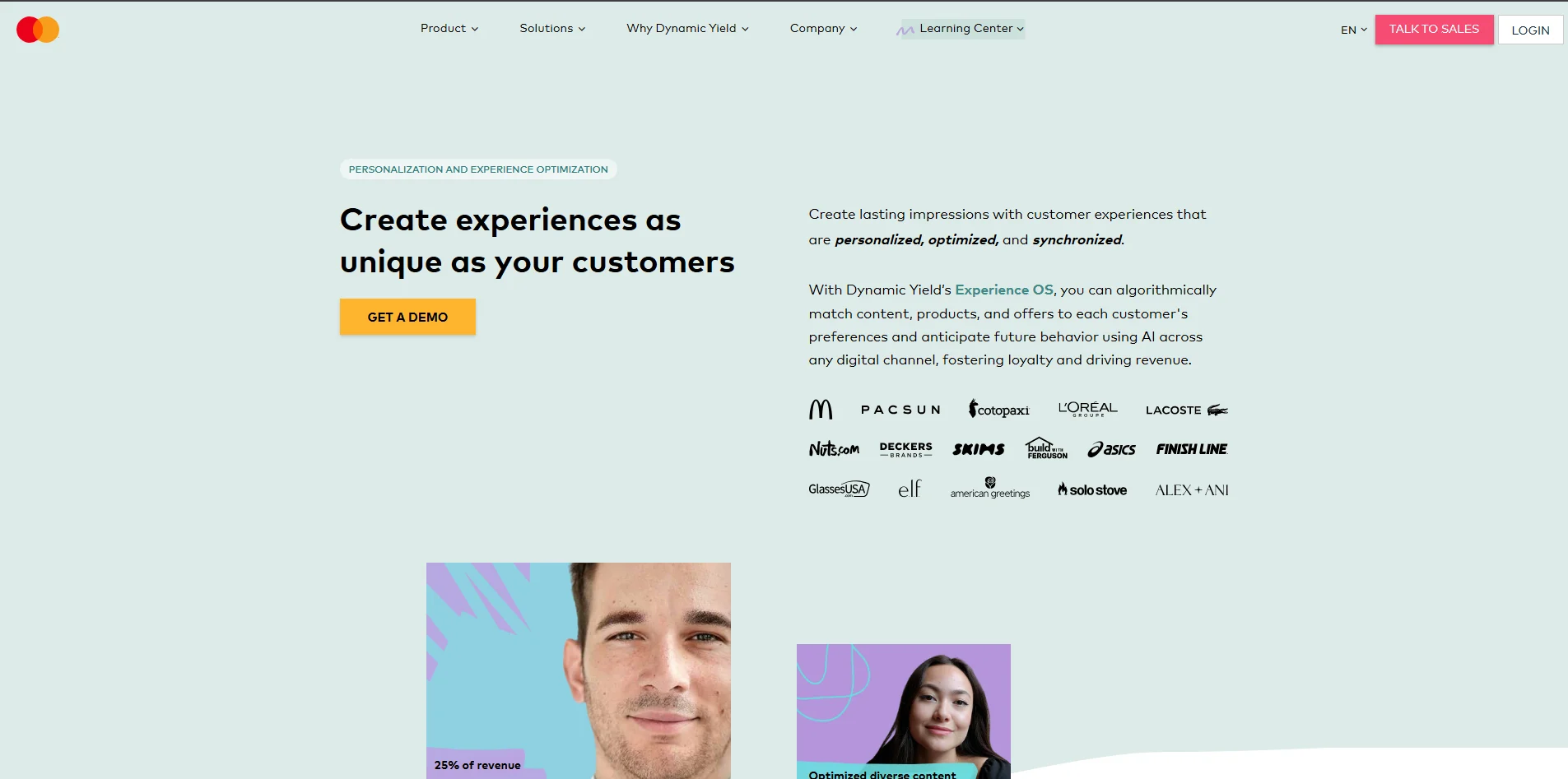
Dynamic Yield
A powerful tool shaped by artificial intelligence, Dynamic Yield helps big companies tailor what users see. Across sites, phone applications, and messages sent by email, it adjusts content on its own. What stands out is how deeply it learns from behavior without needing constant direction. Large teams rely on it because it adapts quietly in the background. Instead of guessing, it uses patterns found in real actions. Personalized paths emerge simply by watching and responding. This kind of automation runs steadily behind user interactions.
Why Choose This?
A fresh start each time keeps things moving. Dynamic Yield works well when companies need room to grow and adapt quickly. Not just learning on its own, it also runs sharp tests behind the scenes. Brands shape better moments for users, without hitting pause. Progress happens step by step, fed by smart adjustments.
Key Features
- Real-time personalization engine
- Advanced audience segmentation
- Behavioral targeting
- Product recommendation system
- A/B testing and multivariate testing
- Omnichannel personalization
- Predictive targeting
Pros
- Highly scalable for large businesses
- Advanced AI capabilities
- Strong analytics and reporting
- Supports multiple channels
- Excellent testing features
Cons
- Costs more when you run a smaller operation
- Requires technical expertise
- Setup can be complex
Adobe Target
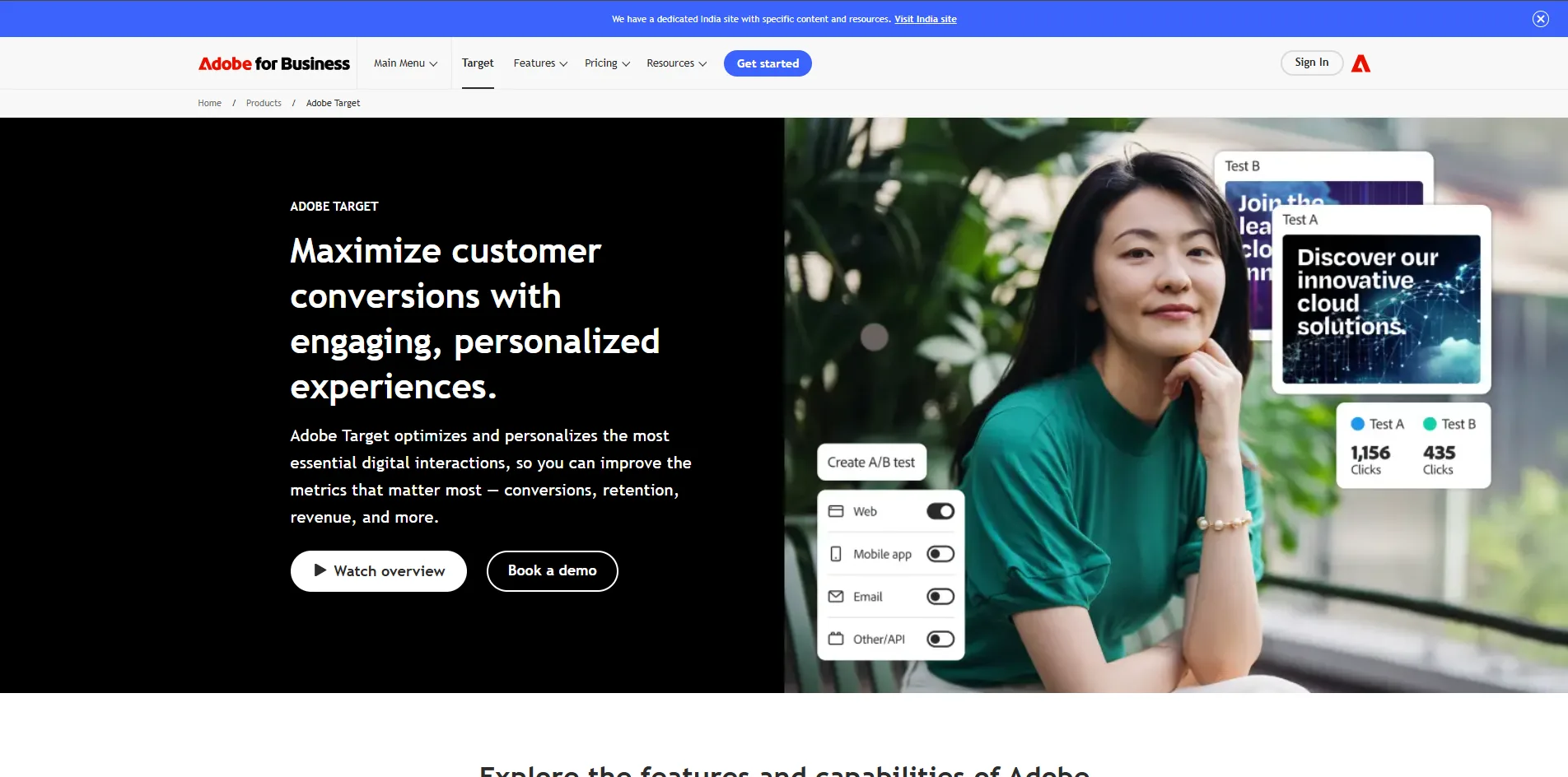
Out there among tools for shaping online visits, one stands out - Adobe Target. Built into the Adobe Experience Cloud, it tweaks what users see based on their behavior. Instead of guesswork, it leans on machine learning to adjust content in real time. Across websites or apps, changes happen quietly, tailored behind the scenes. Personal touches appear without flashing banners or loud prompts. Learning happens continuously, feeding off interactions. Digital spaces shift slightly, just enough to feel familiar.
Why Choose This?
When it comes to businesses already running on Adobe tools, Target slips right into place without hassle. Built-in links between systems mean less setup work upfront. Personalization at scale comes naturally here, backed by solid testing features that handle heavy traffic. Matching existing workflows feels smooth, mostly because components speak the same language. Complex adjustments stay manageable thanks to consistent performance under pressure.
Key Features
- AI-driven automated personalization
- A/B and multivariate testing
- Experience targeting
- Real-time customer insights
- Integration with Adobe Analytics
- Recommendation engine
Pros
- Strong integration with Adobe ecosystem
- Advanced testing tools
- Reliable and scalable
- High-quality data insights
Cons
- High pricing
- Complex for beginners
- Requires training to use effectively
Salesforce Einstein
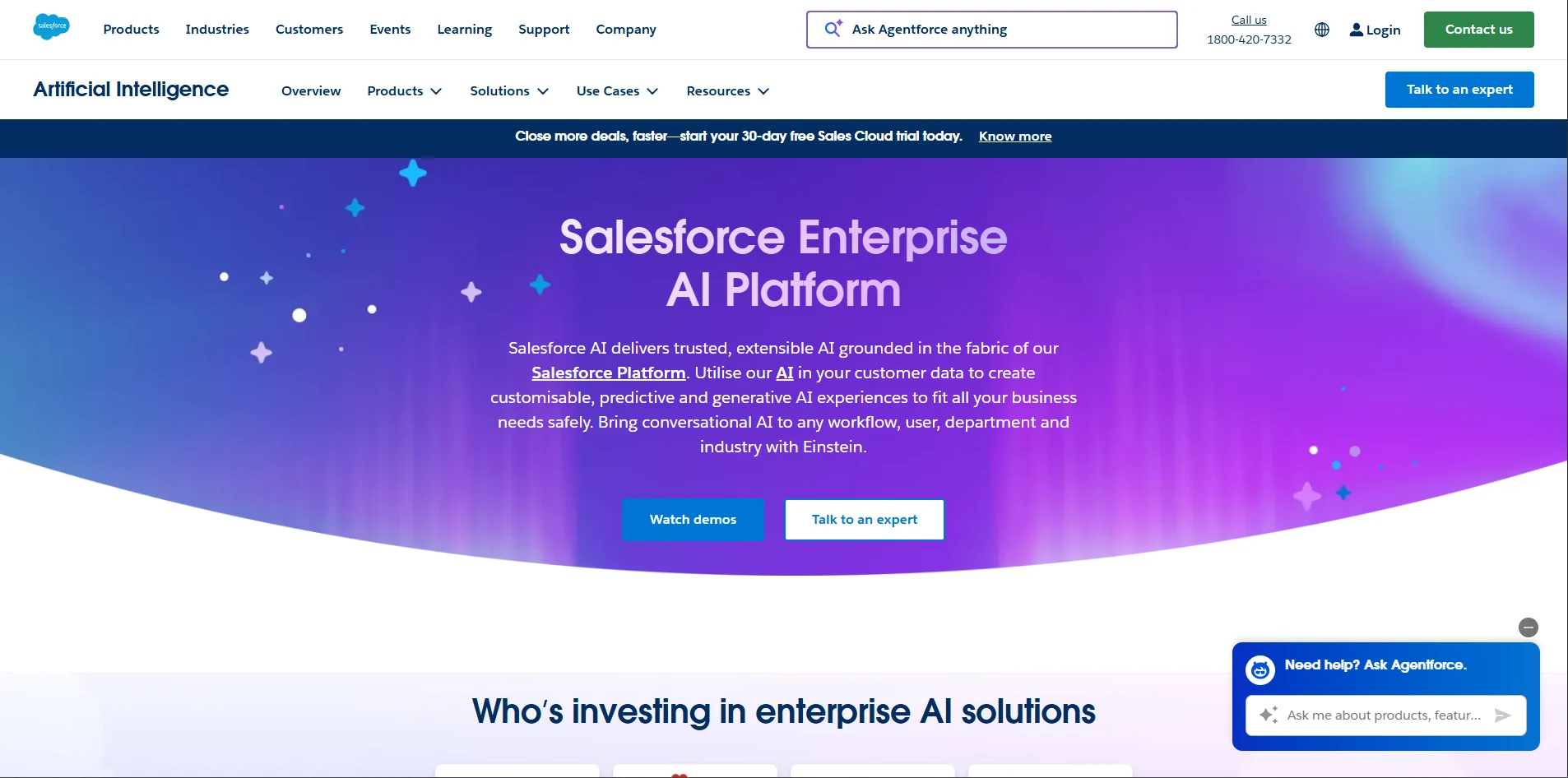
A smart assistant lives inside Salesforce, built right into its core. This feature uses artificial intelligence to make sense of data over time. Instead of guessing, teams get hints about what customers might do next. Personal touches become easier when insights show up where work happens. Predictions shape how messages are tailored, one interaction at a time.
Why Choose This?
Not every tool fits all, yet this one clicks when you’re inside the Salesforce world. Built-in smarts dig into customer behavior without extra steps. One task after another gets handled - marketing moves, follow-ups, outreach - without needing to jump between apps. What shows up feels less like guesswork, more like clear signals guiding next steps.
Key Features
- Predictive lead scoring
- AI-driven email personalization
- Customer behavior analysis
- Sales forecasting
- Workflow automation
- Chatbot integration
Pros
- Seamless integration with CRM
- Powerful predictive analytics
- Improves sales efficiency
- Automates repetitive tasks
Cons
- Requires Salesforce ecosystem
- Can be expensive
- Learning curve for new users
Segment (by Twilio)
One way to look at Segment? It's a system companies use to gather and organize information about their customers. Though not built entirely on artificial intelligence, it sets the stage for tailored experiences. What happens next depends on how teams put that unified data to work. Behind the scenes, it connects dots across different touchpoints. Think of it as groundwork before personalization kicks in.
Why Choose This?
Businesses wanting one clear place for customer details might find this tool fits. It moves information smoothly between different apps so messages feel more personal. When systems talk well together, updating records becomes less messy. Some teams notice fewer errors after switching over. Personal touches grow easier when data flows without delays. Tools work better if they share the same facts. Not every company needs tight connections like this, but some rely on them heavily.
Key Features
- Unified customer profiles
- Real-time data collection
- Integration with multiple platforms
- Audience segmentation
- Data governance and privacy tools
Pros
- Easy to integrate
- Clean and structured data management
- Supports multiple marketing tools
- Scalable for growing businesses
Cons
- Limited built-in AI features
- Costs increase with usage
- Few extra gadgets needed if you want deeper custom options
.webp)
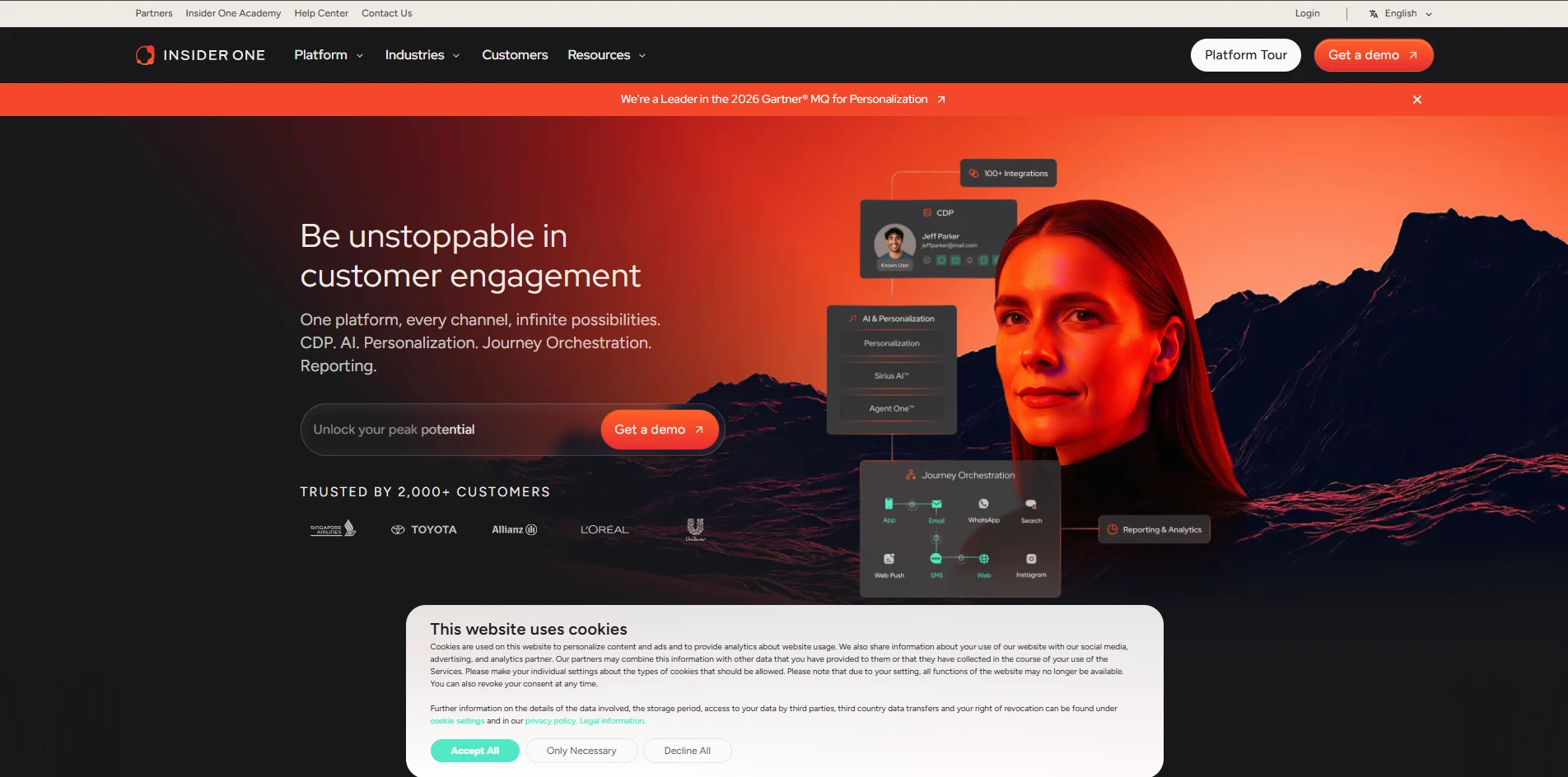
Insider
A fresh take on managing expansion, Insider shapes tailored interactions for users wherever they engage. Favored by online sellers especially.
Why Choose This?
What stands out about Insider is how simple it feels right from the start. Getting it running takes little time at all. Companies looking to see outcomes quickly tend to lean toward this option. Technical hurdles? Almost none show up along the way.
Key Features
- AI-driven product recommendations
- Predictive segmentation
- Cross-channel marketing
- Customer journey builder
- Personalized push notifications
- Email and SMS automation
Pros
- User-friendly interface
- Fast implementation
- Strong eCommerce features
- Price fits tight budgets when stacked against big-name software
Cons
- Limited advanced customization
- Falls short when it comes to large-scale demands
- Fewer connections available when stacked against similar tools. Some rivals simply offer more ways to link up systems
Comparison Table
| Tool | Best For | AI Capability | Ease of Use | Pricing Level | Integration |
|---|---|---|---|---|---|
| Dynamic Yield | Enterprises | Very High | Medium | High | Strong |
| Adobe Target | Adobe Users | Very High | Medium | High | Excellent |
| Salesforce Einstein | CRM Users | Extremely High | Medium | High | Excellent |
| Segment | Data Management | Medium | High | Medium | Strong |
| Insider | eCommerce | High | High | Medium | Good |
Choosing the Right Tool
Choosing the right AI personalization tool depends on multiple factors:
1. Business Size
- Small businesses: Insider, Segment
- Medium businesses: Insider, Segment, Salesforce
- Firms like Dynamic Yield serve big companies. Meanwhile, Adobe Target works with enterprise-level clients.
2. Budget
- Low budget: Segment
- Medium budget: Insider
- High budget: Adobe Target, Dynamic Yield
3. Technical Expertise
- Beginners: Insider
- Intermediate: Segment
- Advanced users: Dynamic Yield, Adobe Target
4. Existing Tools
- Using Salesforce → Choose Einstein
- Pick what you want to adjust inside Adobe. Go for the element that needs changing
How AI Adapts to Individual Need
1. eCommerce Personalization
- Product recommendations
- Personalized discounts
- Dynamic pricing
- Cart abandonment recovery
2. Email Marketing
- Personalized subject lines
- Behavior-triggered emails
- Customized offers
3. Website Personalization
- Dynamic landing pages
- Content recommendations
- Location-based customization
4. Mobile App Personalization
- Push notifications
- In-app messages
- User journey optimization
AI personalization challenges
Few realize how tough it can be when using smart software - helpful, yes, yet full of hurdles. Problems pop up where least expected.
1. Data Privacy Issues
Folks care more these days where their info ends up. Staying clear of trouble means companies stick to rules such as those in GDPR.
2. High Cost
Fees for high-end artificial intelligence systems often run steep, hitting tight budgets hard.
3. Complexity
Not every tool works without some know-how behind it. Learning how things function helps make sense of their use. A bit of practice often makes a difference when starting out.
4. Data Quality
A machine learns what it sees. Garbage in means garbage out.
AI shaping how customers are seen
One thing seems clear now - AI that fits you personally has a bright path ahead. Look at what’s coming next: small shifts today might shape big changes tomorrow
1. Hyper-Personalization
From fresh angles, machines learn what fits one person alone. Each moment shaped just right, yet never repeating steps. What feels unique today grows out of quiet shifts behind the scenes.
2. Voice and Conversational AI
Later on, voice helpers might shape how things feel more tailored. Meanwhile, chat-based tools could shift the way experiences fit individual needs.
3. Predictive Analytics
Faster than a thought, machines learn what people might do next. Before choices appear, patterns show where actions lead. What seems unpredictable now becomes clear ahead of time.
4. Privacy-First Personalization
Privacy matters just as much as tailored experiences now shaping business goals.
FAQ
Conclusion
Fueled by artificial intelligence, tailoring service to individuals isn’t optional anymore - staying relevant demands it now. When people interact with companies, they want recognition, foresight, and relevance woven into every moment.
What you’ll find inside this guide are five platforms: Dynamic Yield, Adobe Target, Salesforce Einstein, Segment, and Insider. These bring strong features that support business objectives in distinct ways. One might excel at personalization while another focuses on data flow. Depending on company size or industry, a certain fit becomes clearer. Some work better when real-time choices matter most. Others stand out by connecting systems smoothly behind the scenes. Needs shape which option makes sense for any given team.
Starting fresh? Try Insider plus Segment to begin. Bigger teams might prefer Dynamic Yield along with Adobe Target for deeper tools. When CRM and sales workflows take center stage, Salesforce Einstein fits right in.
A single thought matters most: fit shapes success more than features ever could. Your needs steer the choice, money sets limits, skills define what works. What matches your path becomes the right pick - no extra points for complexity.