Out of nowhere, artificial intelligence gives us fake voices and pretend faces that reshape how stuff gets made online. Studios used to need big budgets - cameras, crews, hired speakers - all drained time and cash. Today? A tool does it fast, clicking together clips without humans near the process. Minutes replace weeks when machines handle recording, acting, even filming behind screens.
Out of nowhere, a teacher might now sound just like a film narrator. You see it on videos, hear it in podcasts - digital voices built by software instead of years of recording. Creators tap into these tools when they need repetition without exhaustion. Companies slip them into training clips so staff hear consistent messages. Even small online hosts run scripts through synthetic speech to save hours. It moves quick, feels strange at first, then blends right in.
These tools can:
- Clone human voices
- Generate realistic AI avatars
- Create multilingual videos
- Automate voiceovers
- Produce talking-head videos without cameras
- Scale content globally
What makes them so popular? It's how fast they work. Creating many copies of the same material takes too long. Now, one version can turn into a video right away. This happens thanks to digital hosts made by artificial intelligence. These hosts speak with voices that sound just like real people. The process skips old methods completely.
Why Choose These Top 5 AI Tools
One reason these five platforms catch attention? They each run the show in separate corners of AI voice and digital face-making. Not by accident do they lead - each carves a unique path in how voices and avatars come to life through tech
- ElevenLabs → best voice realism
- HeyGen → best creator-friendly avatars
- Synthesia → best business videos
- D-ID → best talking-photo technology
- DeepBrain AI → best enterprise-scale production
Side by side, these tools form the most capable mix of AI avatars and voice replication available in 2026.
Top 5 AI Tools for Voice Cloning and AI Avatars in 2026
- ElevenLabs
- HeyGen
- Synthesia
- D-ID
- DeepBrain AI (AI Studios)
What they can do, where they work best, what works well, what falls short - here’s a look at what makes each one different in the world of AI writing right now.
AI voice cloning and avatars spreading quickly
More people are making their own content, so fans want it different ways plus in more tongues.
Businesses also need faster ways to create:
- Training videos
- Product explainers
- Marketing campaigns
- Social media content
- Personalized customer communication
Faster builds happen when synthetic voices pair with digital faces, cutting down delays across the board.
Out of nowhere, today's AI crafts voices so lifelike they carry emotion, rhythm, yet sound completely ordinary. Surprisingly, certain systems animate faces too, matching mouth movements without any help.
Top 5 AI Tools For Voice Cloning & AI Avatars
ElevenLabs
Features (Detailed)
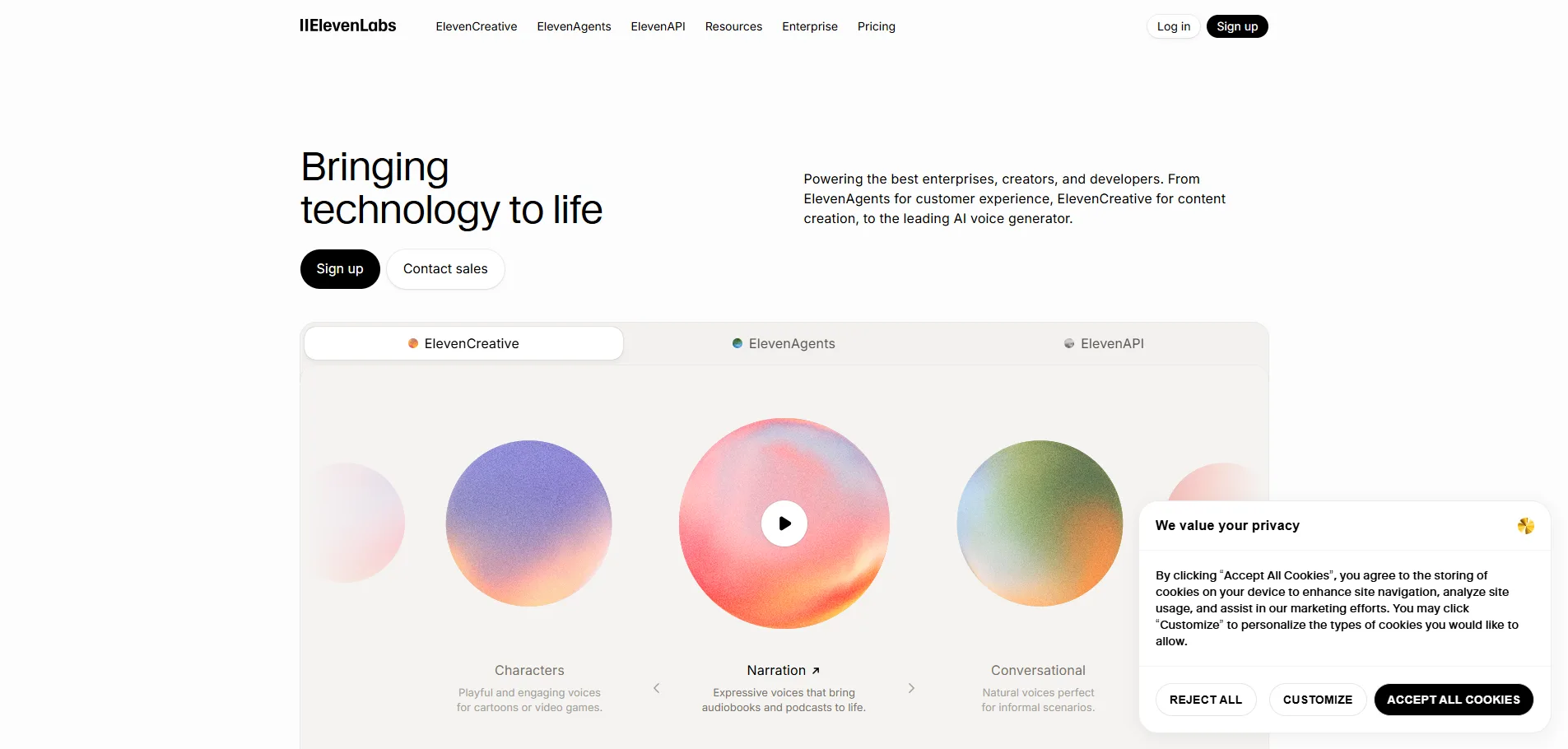
From hushed labs to open forums, ElevenLabs keeps showing up in conversations about lifelike AI voices by 2026. While many tools stumble on tone, this one bends pitch and pause like a human might - so much so that reviewers often place it near the front of the pack when judging how naturally speech flows.
Key Features
- Instant Voice Cloning Clone voices using just a short audio sample.
- Professional Voice Cloning Sound copies come out nearly identical, yet carry feeling too. Not just mimicry - these versions breathe with mood shifts inside each phrase.
- Emotion Control Now slow down a bit, shift how it sounds. Sometimes speed up, let energy rise then fade. Change how words land - softer, sharper, louder, quiet. Delivery bends each time, never stuck one way.
- Multilingual Support Generate voices in multiple languages while preserving voice identity.
- API Access Folks coding apps that listen and talk find this handy. While it suits many tools, voice-driven builds fit best.
- Studio-Quality Narration Prefect when you’re working with spoken word content like long-form audio stories, online video series, or regular voice recordings.
Best For
- YouTubers
- Audiobook creators
- Podcasters
- Developers
Pros
- Extremely realistic voice quality
- Fast voice generation
- Excellent emotional control
- Industry-leading cloning accuracy
Cons
- Spending more each month adds up fast on higher-tier subscriptions
- Getting certain tools working needs a check first
- Occasional pronunciation issues
Why Choose This?
Out of nowhere, ElevenLabs stands out when real-sounding voice copies matter most. Not only does the audio mimic human tones closely, but it also fits smoothly into polished recordings. Instead of robotic tones, expect lifelike delivery that blends right into storytelling or media work.
HeyGen
Features (Detailed)
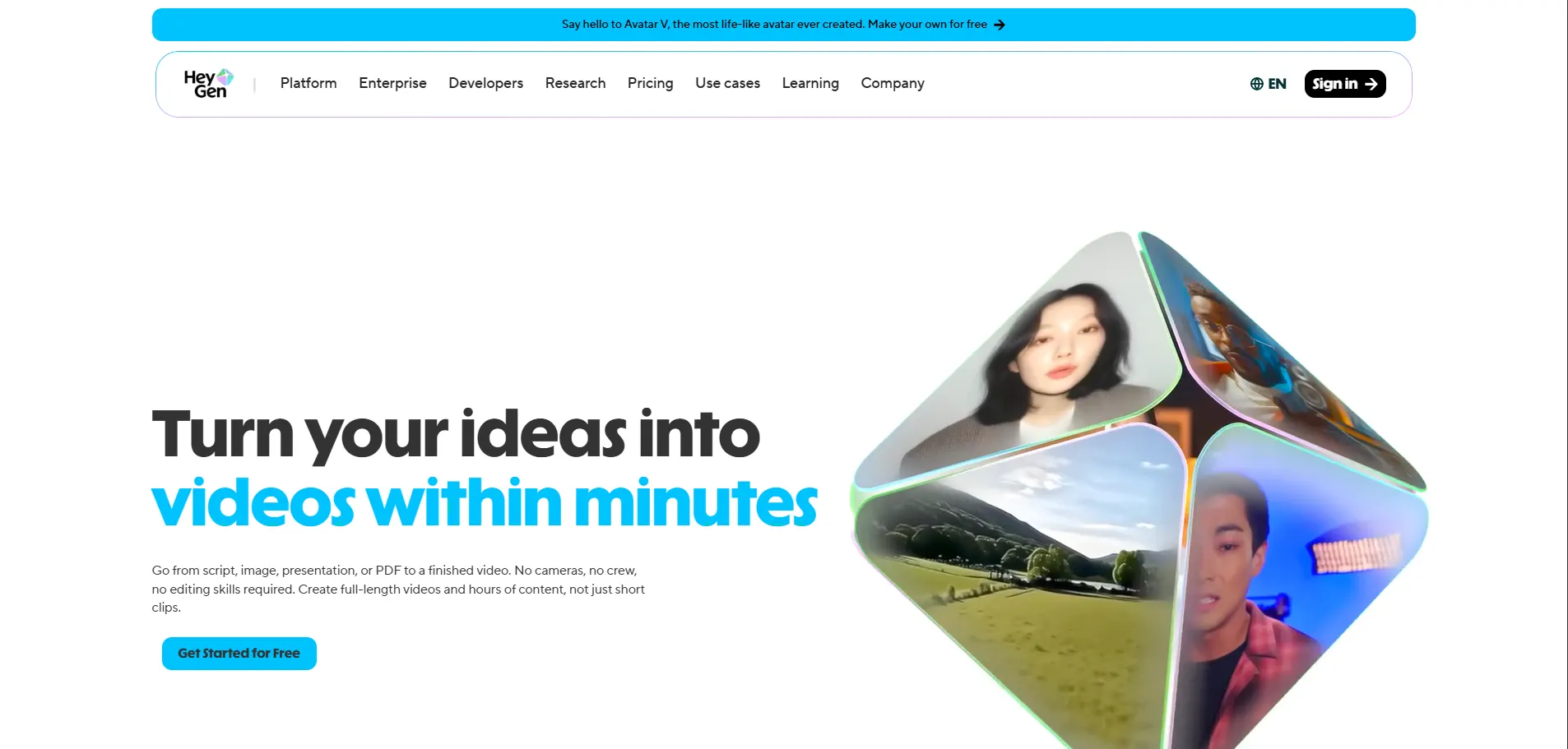
From out of nowhere, HeyGen stepped into the spotlight - realistic faces, voices that cross borders, a layout anyone can follow. Top spots in reviews keep showing up because creators find it fits their rhythm, plus the mouth movements match sound just right.
Key Features
- AI Talking Avatars Create realistic AI presenters from text scripts.
- Voice Cloning Clone your own voice for avatar videos.
- Multilingual Video Creation Videos come out right in many tongues. Different speech paths open up easily. Languages stack up fast without slowing things down.
- Real-Time Lip Sync Faces move just right when they should. Matching motion happens without delay.
- Custom Avatars Build custom digital versions of yourself. One moment they look like you, next they act like you too.
- Template Library Ready-made templates for marketing and business videos.
Best For
- Content creators
- Marketing teams
- Social media videos
- Agencies
Pros
- Easy-to-use interface
- Excellent avatar realism
- Strong multilingual support
- Fast video creation
Cons
- Advanced avatar creation may require higher plans
- Limited free version
- Processing large visuals can be slow
Why Choose This?
Imagine making videos where a lifelike person speaks your script - no camera needed. That’s what happens when you try tools like HeyGen. For people sharing ideas across languages, it speeds things up in surprising ways.
Synthesia
Features (Detailed)
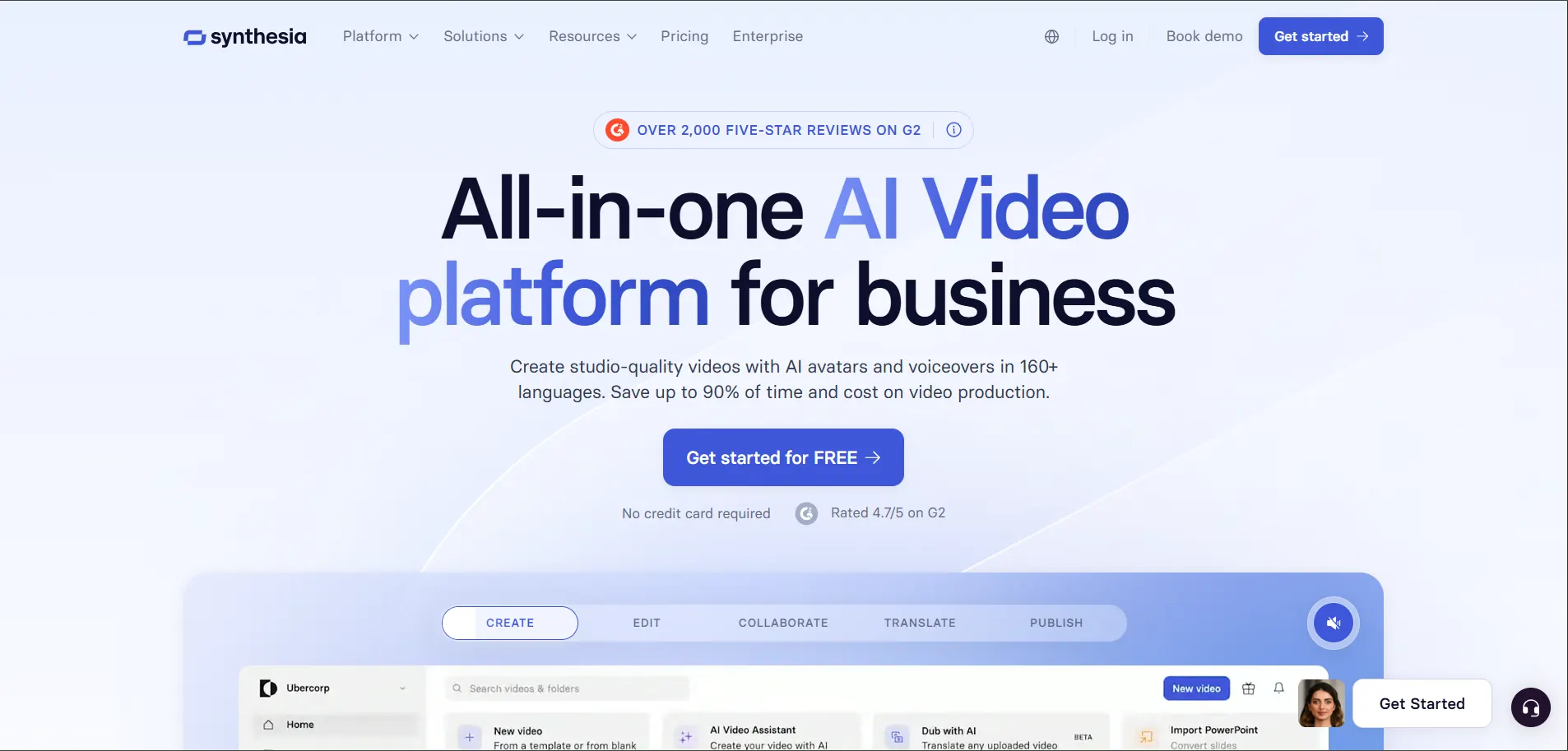
Most companies pick Synthesia when they need AI-powered avatars for work-related clips. Because it fits well into staff training, firms lean on it for orientation sessions instead of live filming. Tutorials come together fast since the system handles voice and motion smoothly behind the scenes. Internal updates also shift toward this tool - replacing long emails with short visual messages made by digital presenters.
Key Features
- 230+ AI Avatars Large collection of professional AI presenters.
- 140+ Languages Create multilingual business videos easily.
- Text-to-Video Workflow Scripts turn into complete videos right away.
- Custom Employee Avatars Businesses can create avatars based on real employees.
- Corporate Templates Perfect when running sessions or teaching groups.
- Enterprise Integrations Plugs into learning systems, ties neatly with customer tools, while fitting right into daily task flows.
Best For
- Corporate training
- SaaS businesses
- Educational content
- Enterprise communication
Pros
- Enterprise-grade quality
- Excellent business workflows
- Professional avatars
- Strong language support
Cons
- Built less for creators, more shaped by business needs
- Costs add up fast when you're just starting out
- Limited creative flexibility
Why Choose This?
For companies needing videos at scale, Synthesia works well - no cameras or studios required. Instead of long shoots, teams create content fast using digital tools. Some rely on actors and sets; others skip them entirely. It helps when budgets are tight but output must grow. Without physical gear, updates happen quickly. Remote work fits naturally into the process. Not every firm needs film crews anymore.
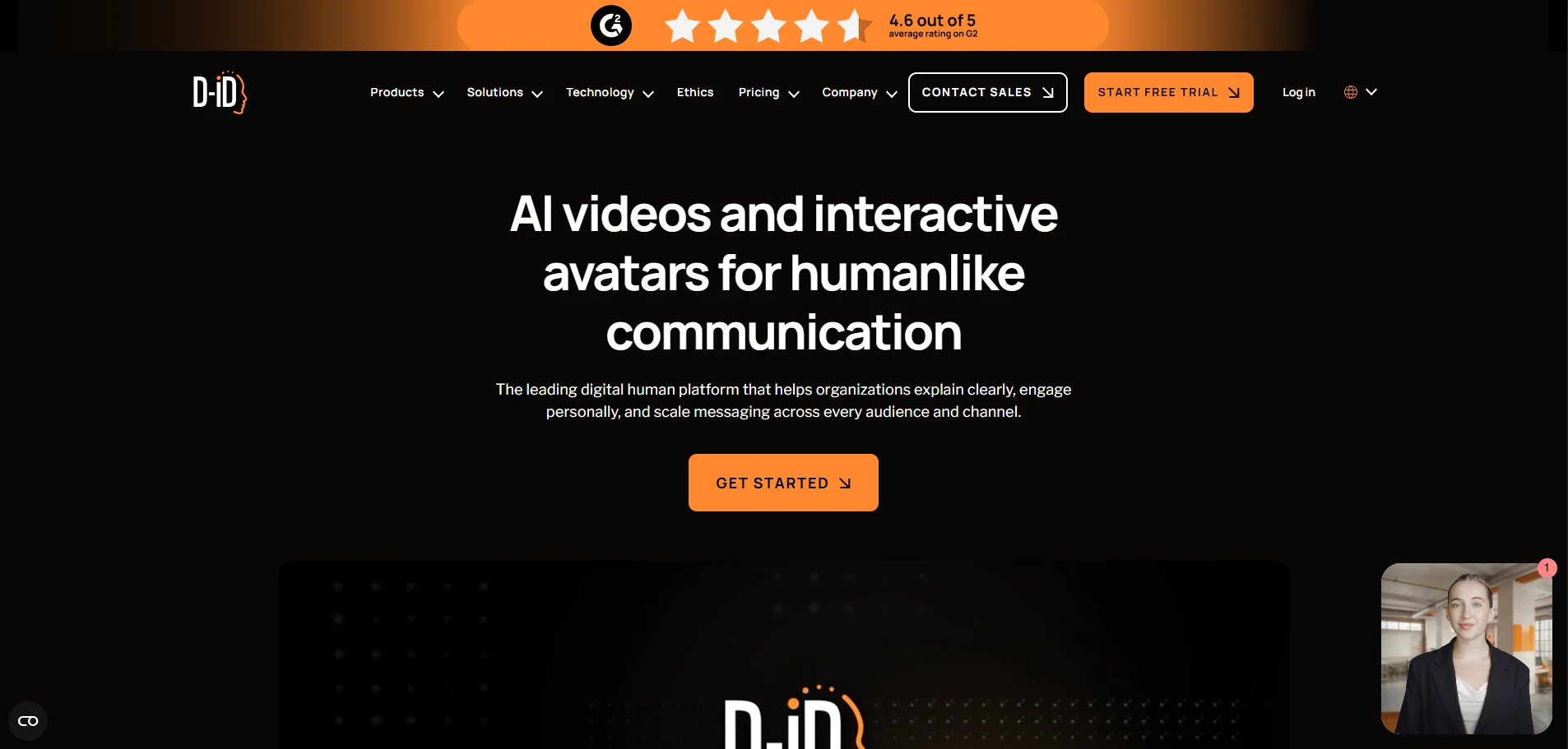
D-ID
Features (Detailed)
Images come alive through speech using D-ID’s technology. Instead of staying silent, pictures speak up with artificial voices made by this company. What once sat still now moves lips to form words naturally. Faces in photos begin conversations like real people do every day.
People often choose it when building chatbots that adapt to users. What stands out is how well it handles tailored conversations.
Key Features
- Talking Photo Technology Animate still images into speaking avatars.
- AI Voice Integration Combine avatars with cloned or generated voices.
- API Support Build AI avatar experiences into apps and websites.
- Real-Time Streaming Interactive AI avatar conversations.
- Photo-Realistic Avatars Strong visual realism.
- Easy Video Generation Fast browser-based workflow.
Best For
- Interactive AI assistants
- Personalized videos
- Customer engagement
- Developers
Pros
- Unique talking-photo technology
- Good API ecosystem
- Easy to create avatar videos
- Strong realism
Cons
- Premium pricing for advanced use
- Limited editing features
- Requires quality inputs for best results
Why Choose This?
Photos bring avatars to life quickly, helping companies and makers skip complex designs. Real images speed up video creation, replacing the need for detailed digital models. Faces turn into moving clips without long setups. Simple inputs lead to quick outputs. Tools like D-ID cut steps usually tied to animation. Visuals form faster when starting with existing pictures. Process time drops using familiar faces. No modeling needed means less waiting. Results appear sooner through photo-based methods.
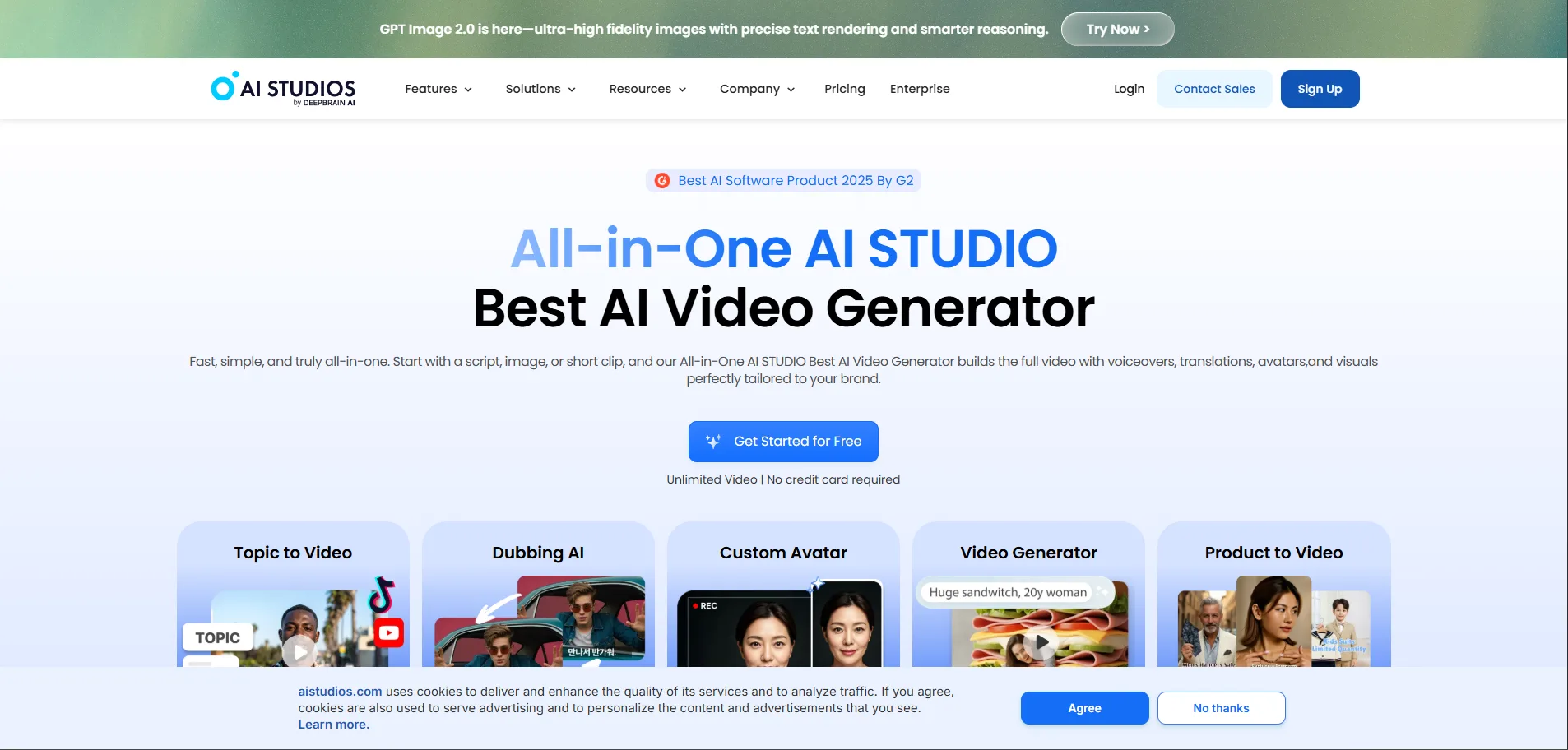
DeepBrain AI Studios
Features (Detailed)
Among current tools, DeepBrain AI stands out with its powerful video creation through artificial intelligence.
What stands out is how clearly it handles high-end AI faces alongside mass video output. Studio-grade results come through when speed meets precision across long runs.
Key Features
- 2,000+ AI Avatars Massive library of realistic avatars.
- More than 150 languages and accents Global content support.
- URL-to-Video Generation Convert articles and webpages into videos.
- AI Script Assistance Helps generate video scripts automatically.
- Presentation Video Creation Built to fit classrooms just as well as boardrooms. Perfect where learning meets working.
- Advanced Lip Syncing High-quality avatar speech synchronization.
Best For
- Enterprises
- Educators
- Training content
- Large-scale video production
Pros
- Huge avatar library
- Strong multilingual support
- Excellent presentation workflows
- Professional-quality output
Cons
- Premium pricing
- Complex for beginners
- Advanced workflows take time to master
Why Choose This?
For teams creating lots of polished videos fast, DeepBrain AI Studios fits right in. Big output needs? It handles those quietly, without fuss. Schools, companies, anyone shaping content at scale - this tool stays steady.
Comparison Table
| Tool | Main Strength | Best For | Ease of Use | Voice Quality | Avatar Quality |
|---|---|---|---|---|---|
| ElevenLabs | Voice cloning | Voiceovers | Easy | Excellent | Medium |
| HeyGen | AI avatars | Creators | Very Easy | Very Good | Excellent |
| Synthesia | Business videos | Enterprises | Easy | Very Good | Excellent |
| D-ID | Talking photos | Interactive avatars | Medium | Good | Very Good |
| DeepBrain AI | Large-scale production | Enterprises | Medium | Very Good | Excellent |
Frequently Asked Questions
Conclusion
Out of nowhere, fake voices built by machines now shape videos just as much as real ones. Jump ahead to 2026 - digital faces that mimic people are reshaping what we see online. Instead of filming, creators often rely on software to speak and appear for them. These changes quietly redefine who - or what - is behind a piece of media.
For creators and companies, these tools cut costs while speeding up how quickly polished material comes together - often filling needs regular studios struggle to match. What once took weeks now finishes quicker, without losing quality, simply by shifting how work flows behind the scenes.
Whether you need:
- realistic voiceovers
- AI presenters
- multilingual videos
- training content
- marketing automation
Using these tools often leads to faster workflows, while also making growth easier to manage.
What works best ties back to what you aim to achieve, yet each of these five tools is shaping how AI helps make content tomorrow.