The blockchain is considered one of the greatest innovations of this decked. It provides a decentralized, transparent way for the management of data. Blockchain removes the need for a middleman, providing a safe and tamper-proof transaction process, proving to be a very useful tool for sectors like finance and supply chain management. It is open-source, allowing innovators from different parts of the world to work on its expansion.
Open-source blockchain initiatives can be seen leading the charge on this technology front. Because open-source blockchains are not using proprietary technology as a competitive advantage, any business can see and modify the code. Open-source or open access blockchain projects allow miners, validators, and transaction submitters to trust the source code, showing how trust has enabled this technology to break down power structures. Decentralized applications, also referred to as dApps, are built based on open-source blockchain projects.
Learning about and comprehending the significance of these projects is important for anyone who wants to learn more about blockchain technology, whether for investment, development, or research-based reasons. Starting from cryptocurrencies that have managed to change the way people look at the financial system through to platforms for decentralized governance and data sharing, the impact of open-source blockchain projects has reached the boundaries of the possibilities of the virtual world through blockchain technological application.
Why These Five Blockchain Projects Are Selected as the Top Five Open-Source Platforms
These blockchain initiatives have been selected taking into consideration the usability and practical impact they create, and not merely the capabilities they offer on paper. A few major parameters that have been taken into consideration include network functionality, scalability, developer acceptance, security, and usability. The aim is to showcase those platforms that create real value to developers and the entire decentralized community.
1. Proven Real-World Usability
Each of these projects has proved its worth in live environments. With the help of Ethereum we can create thousands of decentralized apps (dApps) and smart contracts, including innovations pertaining to decentralized finance (DeFi), NFTs, and Web3 applications. The Hyperledger Fabric has enabled enterprise-level applications in banking, healthcare, and supply chain management, along with providing a safe and permissioned environment. The extremely fast transaction times of Solana make it extremely useful for high-throughput applications, such as trading platforms and NFT marketplaces. Their success in the industry shows that each of these projects, and others like them, have relevance and feasibility and do not exist merely in theory and conceptual frameworks.
2. Developer and Community Support
All open source blockchain projects are essentially based upon the primary involvement of developers. Ethereum has the strongest developers in the entire world of blockchain, which leads to the rapid development of new tools, protocols, and applications. Other projects, like Polkadot or Avalanche, are based solely on the concept of interoperability or custom blockchains and developers. These projects promote the notion of experimenting and innovating. A healthy developer community is the key to the ongoing development of the blockchain platform, including the remediation of security exploits, new feature updates, or expansion of the blockchain platform.
3. Scalability and Performance
High transaction volumes and low latency are essential for the implementation of the blockchain technology. These work well in the following areas:
- A good blockchain should have high transaction capacity without any speed issue.
- Solana and Avalanche excel in higher speed, low cost of transactions.
- Ethereum is implementing scaling solutions like rollups and sharding.
- Polkadot’s parachain structure ensures scalable and flexible cross-chain operations.
4. Security and Reliability
Security remains a fundamental requirement for blockchain adoption.
- Security is a cornerstone of blockchain adoption.
- Hyperledger Fabric offers permissioned access for enterprises, ensuring privacy and identity management.
- Ethereum, Avalanche, and Polkadot use well-tested consensus mechanisms to maintain network integrity.
- Reliable platforms are essential for both developers and end-users to build trust in decentralized systems.
5. Innovation and Future Potential
These projects not only aim to solve problems that exist presently, but they are also contributing towards the future with respect to the development of blockchain technology. Interoperability is the key aim for Polkadot, as it enables effortless interactions between different blockchains. Solana is optimizing and making transactions that are also fast, cheap, and focused towards the development of use cases like DeFi and NFTs. Avalanche assists in the development of customizable blockchains for specific use cases. Ethereum is at the forefront with respect to the development of smart contracts, as they are the backbone for the entire decentralized applications ecosystem.
5 Blockchain Projects Every Beginner Can Start With
1. Ethereum - The First Smart Contract Framework
Ethereum is a decentralized blockchain network with the functionality of smart contracts, allowing the development of decentralized applications or dApps that are not interrupted and are not controlled by third parties. It's one of the most popular blockchain platforms in the open-source community and second only to Bitcoin in market capitalization. It has an enormous community for DeFi, NFT, and Web3 applications, and with the latest upgrade to Proof of Stake, the scalability issues of energy consumption are being resolved.
Key Features of Ethereum
- Smart contract functionality for dApps.
- Supports DeFi, NFT, and Web3 ecosystems.
- Upgradeable through Ethereum 2.0 with Proof of Stake and sharding.
Pros
- Extensive developer tools and documentation.
- Large ecosystem of applications and users.
- Continuous improvements in scalability and energy efficiency.
Cons
- Network congestion can lead to high gas fees.
- Scalability still developing through rollups and sharding.
- Upgrades may be complex for some developers.
Ethereum is predicted to become the backbone of everything decentralized and will continue to push boundaries with the development of scaling solutions, such as rollups and sharding.

2. Hyperledger Fabric - An Enterprise Solution in Blockchain
The Hyperledger Fabric is a popular toolkit for the development of blockchain applications. The project is sponsored by the Linux Foundation and aims to offer enterprise-grade secure, private, and permissioned blockchain solutions. The Hyperledger Fabric is a permissioned blockchain platform; thereby, control of accessing the blockchain is possible, which is not in other public blockchains. Thus, the Hyperledger Fabric is most appropriate for private sectors such as logistics, banking, and healthcare. The good thing is that it supports high-speed transaction processing at the latency of finality and confirmation and is backed by the leading cloud service organizations such as Google Cloud, Amazon, Microsoft, and Oracle.
Key Features of Hyperledger Fabric
- Modular architecture for flexible deployments.
- Permissioned network for privacy and identity management.
- High-speed transactions with low latency.
- Supported by top cloud providers for enterprise integration.
Pros
- Strong focus on enterprise security and privacy.
- Proven adoption in corporate and government solutions.
- Highly customizable for various business needs.
Cons
- Not designed for public cryptocurrencies or DeFi.
- Smaller developer ecosystem compared to Ethereum.
- Setup and management require technical expertise.
So, it is safe to say Hyperledger Fabric blockchain is not just about cryptocurrencies; blockchain can solve business problems.
3. Polkadot – The Interoperability Leader
Polkadot is a scalable, secure and decentralized blockchain platform with various functionality. This platform fixes one of the biggest problems with blockchains: interoperability. The goal of Polkadot is to connect blockchains, which is quite different from operating blockchains in silos, and it features a unique parachain system. It is a cross-chain communication framework that allows for the development of decentralized apps (dApps) and services.
Key Features of Polkadot
- Parachain structure for multiple interoperable blockchains.
- Shared security across connected blockchains.
- Flexible scalability for high-performance dApps.
- Parachain auctions to encourage ecosystem growth.
Pros
- Strong interoperability between blockchains.
- Flexible and scalable architecture.
- Encourages innovation through parachain ecosystem.
Cons
- Complex structure may be challenging for beginners.
- Smaller adoption compared to Ethereum.
- Ecosystem still maturing.
It is one of the most successful projects to enhance the fundamental technology that powers dApps. This is extremely forward-thinking and revolutionary, which has laid a pathway to become the standard for developing Web3.
4. Solana – The Ultra Related to Low-cost, High-speed Transactions
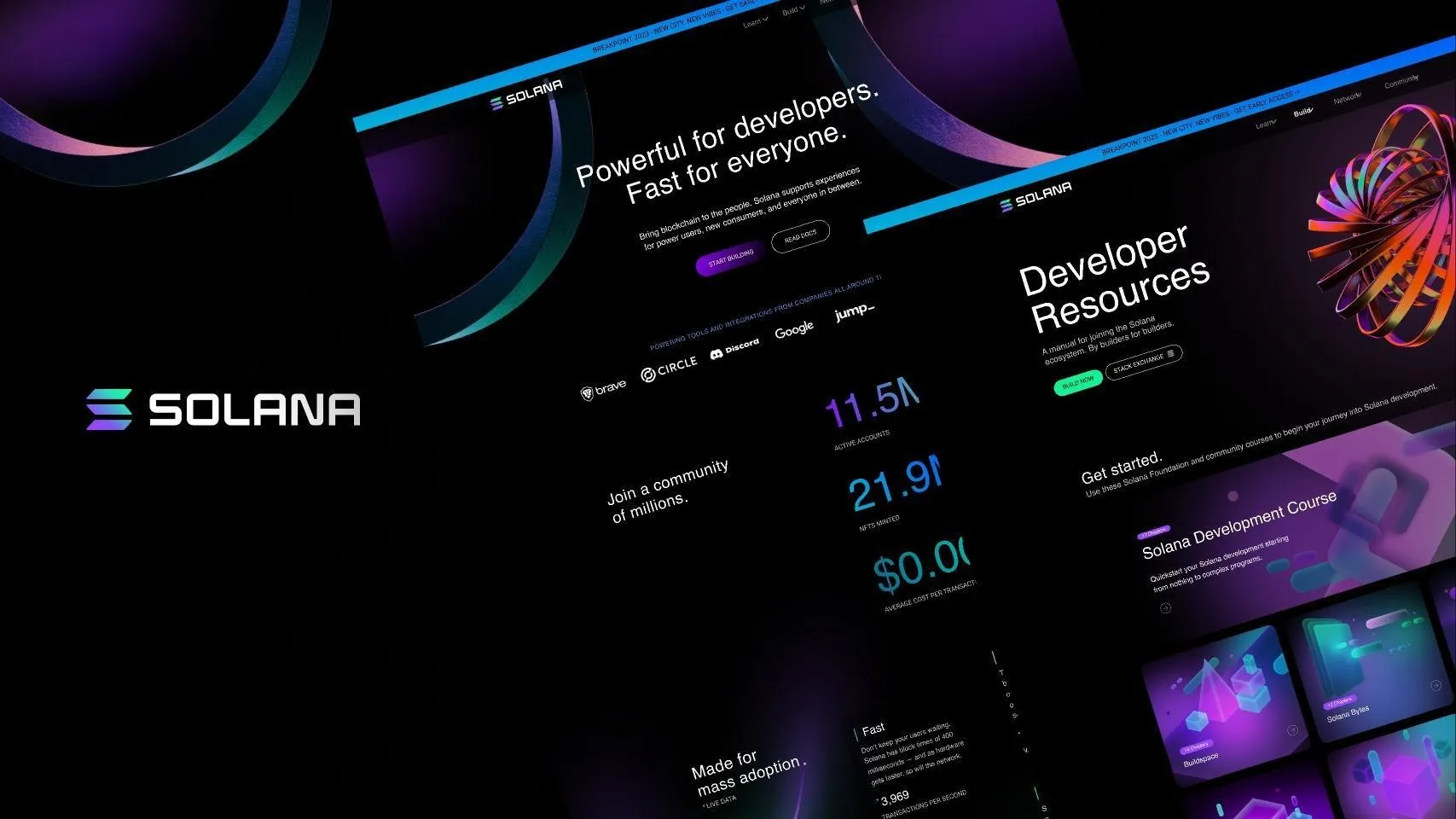
Solana is recognized for having fast transaction times with low costs, characteristics that suit it well for use in DeFi services, NFT marketplaces, or the gaming industry. Solana’s consensus algorithm, which is a proof of history (PoH), has the capacity to process a high number of transactions on a second-second basis.
Key Features of Solana
- Proof-of-History (PoH) for high-speed transaction processing.
- Low transaction fees compared to other blockchains.
- High scalability supporting complex dApps.
- Rapidly expanding Web3 ecosystem.
Pros
- Extremely fast and efficient transaction processing.
- Low cost per transaction.
- Strong ecosystem growth for Web3 applications.
Cons
- Occasional network outages.
- Validator structure less decentralized than some competitors.
- Smaller developer ecosystem compared to others.
If you are looking for an open source blockchain project that offers impeccable performance and scalability, Solana is one of the best among all platforms.
5. Avalanche – Highly Adaptable and Scalable
Avalanche, developed by AvaLabs, represents a flexible and highly performant blockchain framework. The software enables the user to develop custom subnets for application-specific blockchains, facilitates the execution of smart contracts, as well as supports EVM, allowing the easy adoption of Ethereum-based projects.
Key Features of Avalanche
- Able to process over 4,500 transactions per second.
- Ethereum Virtual Machine (EVM) compatible.
- Custom subnets for specialized blockchain deployments.
- Strong adoption in DeFi, NFTs, and gaming.
Pros
- High-speed transaction processing.
- Flexible customization for enterprise or niche applications.
- Easy integration with Ethereum-based projects.
Cons
- Newer platform, ecosystem smaller than Ethereum.
- Technical knowledge needed for custom subnet creation.
- Competes with other high-performance Layer-1 blockchains like Solana.
Avalanche offers the perfect balance between performance and flexibility, making it highly popular for developers seeking flexibility in custom blockchains.

Comparison
| Project | Focus | Strength | Best For |
|---|---|---|---|
| Ethereum | Smart Contracts | Largest Ecosystem | dApp Development |
| Hyperledger Fabric | Enterprise | Security & Privacy | Business Solutions |
| Polkadot | Interoperability | Cross-chain Support | Scalable dApps |
| Solana | High Performance | Speed & Low Cost | DeFi & NFTs |
| Avalanche | Custom Blockchains | Flexible Subnets | DeFi & Enterprise |
Conclusion
Open-source blockchain projects are key in developing the future of the decentralized world by secure transparency, collaboration, and innovation. Each of the five projects covered, namely Ethereum, Hyperledger Fabric, Polkadot, Solana, and Avalanche, solve various problems and applications pertaining to blockchain, making each essential.
For newbies, knowledge of these platforms serves as a great foundation to venture into either investing, development, or business adoption related to blockchains. As technology in the field of blockchains keeps advancing, knowing everything about these platforms and staying updated information-wise will definitely put you ahead of the curve in this constantly changing digital world of technology and innovations.