The development of new tools continues to evolve at an accelerating rate, driven by demand for decentralized apps, blockchain solutions, and possession of digital assets. Tools built on Web3 differ from those built on Web2 primarily by focusing on decentralization, transparency, and user control within the application itself. Amongst the creation of dApps, current Web3 tools have much more advanced capabilities for easing the complexities involved with using blockchain technology (for example, creating and managing smart contracts, using wallets, collecting and analyzing real-time data, etc.) compared to previous versions of these same tools, allowing developers and organizations to develop scalable dApps. Over the last few years, there has been a noticeable improvement in both developer/user experience versus the previous experience level of using Web3 tools through the removal of technical barriers previously associated with the use of Web3 tools.
Today, advanced tools such as Foundry, Helius, Immutable Passport, Privy, Composio Crypto Kit, etc., are changing the way Web3 applications are being built as well as utilized. These tools are offering features such as faster smart contract testing, real-time data streaming, wallets, passwordless authentication, as well as artificial intelligence-based automation.
Why Choose Top 5 Trending Web3 Tools Right Now?
That’s exactly why choosing the right tools matters more than ever. Tools like Foundry, Immutable Passport, Helius, Composio Crypto-Kit, and Privy are not just trending-they are solving real problems developers and users face daily.
Efficiency is a major factor in deciding to use these tools for development. When developing smart contracts, onboarding users, or automating workflows, these systems help shorten the length of development time. Reason being is that users do not have to manage a complicated infrastructure and do not have to explain to users about how they will manage their wallets. This is particularly true for startups and remote teams where both time and resources are limited.
Another key advantage is user experience. Web3 has struggled with adoption mainly because it's complicated. Tools like Immutable Passport and Privy make onboarding feel like Web2, while Helius and Foundry simplify backend development.
With AI integration (Composio), embedded wallets (Privy), and high-speed development frameworks (Foundry), the ecosystem is clearly moving toward making blockchain invisible to the end user. And that’s exactly what will drive mass adoption.
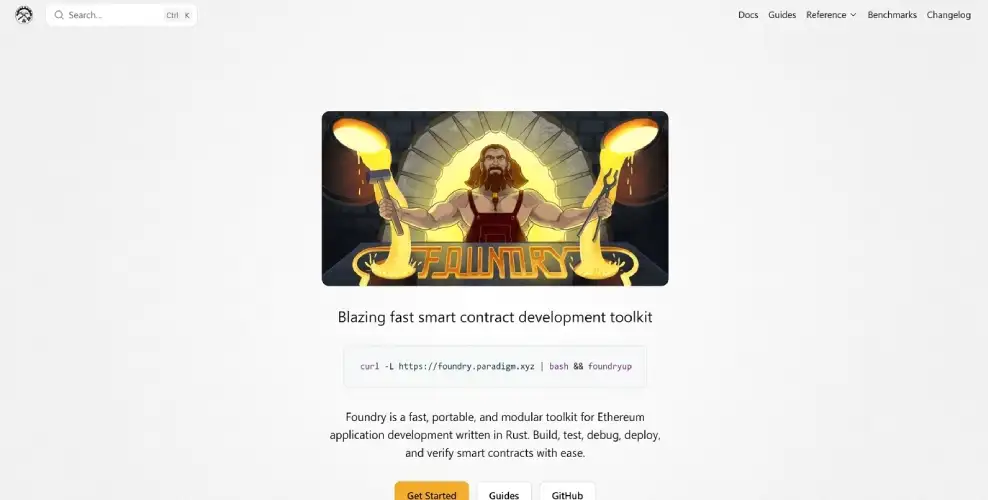
Foundry (Development Framework): A Powerful Tool for Modern Web3 Development
The Web3 ecosystem is getting bigger and bigger. This means that developers need a lot of tools to make contracts that work well. One tool that people are talking about a lot is Foundry. Foundry is a way to make contracts for Ethereum and other blockchains that work with EVM. It is made using Rust. Foundry is special because it is fast and easy to use. It does not take a lot of work to use Foundry. This is why a lot of people know about Foundry and use it to make contracts. Foundry helps people write and test their contracts. It also helps them fix problems and put their contracts on the blockchain. Web3 ecosystem and Foundry are important for developers who make contracts. Foundry is a tool for people who make smart contracts, on Ethereum and other blockchains that work with EVM.
Why Foundry Is Useful
For the developers who work on Web3, Foundry is a valuable resource because it simplifies and streamlines the entire process of developing smart contracts. Traditional frameworks usually involve multiple tools and configurations to use together. In contrast, Foundry consolidates everything into one tool so developers can compile their contracts, run tests, simulate the blockchain environment, and interact with their smart contracts all without having to install different dependencies.
In addition to the convenience of working within a single framework, the other big advantage of using Foundry is the speed at which you can compile your contracts and execute your tests. Since all of the code for Foundry is written in Rust, it compiles contracts and runs tests much more quickly than other similar JavaScript-based frameworks. As a result, developers can work on rapid iterations and make repairs to their smart contracts faster while also being able to improve the security of their smart contracts through extensive testing (including fuzz testing and invariant testing).
Key Features
- Forge Testing Framework
- Anvil Local Blockchain Node
- Cast Command-Line Tool
- Built-in Fuzz Testing
- Fast Compilation and Testing
- Gas Optimization Tools
- EVM Compatibility
Pros
- Extremely fast performance due to Rust-based architecture
- Native Solidity testing for smoother development workflow
- Lightweight and minimal configuration required
- Built in tools for testing, debugging, and deployment
- Powerful fuzz testing for improved smart contract security
- Strong compatibility with Ethereum and EVM-based blockchains
Cons
- Steeper learning curve for beginners compared to some frameworks
- Primarily CLI based, which may be challenging for developers who prefer graphical interfaces
- Smaller plugin ecosystem compared to older tools like Hardhat
- Community resources and tutorials are still growing
 getfoundry.sh
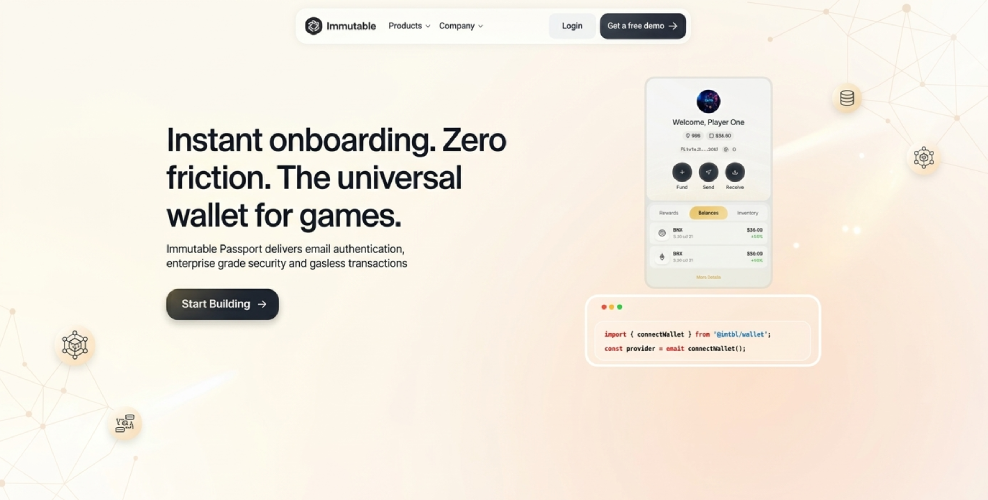
Immutable Passport (User Onboarding) – A Game-Changer in Web3
When I first tried Immutable Passport, it didn’t feel like a typical Web3 experience. There was no “write down your seed phrase” panic. Instead, I signed up using email and a quick verification step. Behind the scenes, it quietly created a secure, non-custodial wallet for me. It honestly felt more like signing into Netflix than entering a blockchain ecosystem-and that’s exactly why it stands out in today’s trending Web3 tools.
Why Immutable Passport Is Useful
If you’ve ever had to onboard someone into Web3-maybe a client, teammate, or even a friend-you know how time-consuming it can be. Explaining wallets alone can take 20–30 minutes. Immutable Passport removes that friction completely.
Key Features
- Passwordless Login: Sign up with email or OTP-no passwords needed
- Automatic Wallet Creation: A secure wallet is created instantly in the background
- Non Custodial Security: You still own your assets and private keys
- Cross Platform Access: Use one identity across multiple apps and games
- Frictionless Transactions: Reduced or simplified gas fee experience
- Built for Web3 Gaming: Optimized for gaming ecosystems and NFT platforms
Pros
- Extremely beginner friendly
- Removes the biggest barrier in Web3 (wallet complexity)
- Fast onboarding for teams and users
- Secure and user-controlled assets
- Smooth user experience similar to Web2 apps
Cons
- Currently more focused on gaming ecosystems
- Not as widely adopted as traditional wallets yet
- Advanced users may want more control/customization
 immutable.com
Helius (Solana Infrastructure) – Powering the Backbone of Web3 Apps
It’s essentially the invisible engine that helps developers interact with Solana without dealing with all the heavy infrastructure work. Instead of running your own nodes or decoding raw blockchain data, you just plug into Helius and start building.
When I first explored Helius, it felt like switching from manual coding to using a powerful framework. Instead of worrying about “how do I fetch transaction data?” or “how do I monitor NFT activity in real-time?”, everything was already simplified into APIs and tools. It acts like a bridge between raw blockchain data and real-world apps-making development faster, smoother, and way less stressful.
Why Helius Is Useful
Suppose you are creating a Decentralized Application (dApp) for a distributed remote workforce. Such Web3 solutions may include some type of dashboard, NFT marketplace, or payment system. Typically, you would need to maintain a significant amount of backend support and infrastructure management including but not limited to servers, nodes, and data pipelines.
Fortunately, there are companies offering ready-made technology and infrastructure solutions capable of delivering such backend infrastructure components as RPC nodes, APIs, and streaming data in real-time. Therefore, you can devote all of your time to developing your dApp while someone else maintains your back-end infrastructure at no additional cost. As such, for developers and startup businesses, this is an enormous benefit – all of these aspects will save tremendous amounts of time, reduce operating costs and significantly increase speed of development.
Key Features
- Reinforced RPC Nodes: Low latency and high uptime access to Solana
- Live Data Streaming: Monitor transactions, NFTs, and wallet movement in real time
- APIs designed for developers: Reliable access to tokens, NFTs and transaction data
- Safety: Automatic detection of attacks and failure scenarios
- Before Deep Parsing: Availability of Raw Data After each block, the biggest chunk of data is distributed.
- Transaction optimization tools: Fast and more efficient transaction processing
Pros
- Makes Solana development much easier
- Saves time (no need to manage nodes manually)
- Extremely fast and scalable
- Ideal for startups, devs, and remote teams
- Reliable infrastructure with high uptime
Cons
- Focused mainly on Solana (not multi-chain)
- Can feel technical for beginners
- Dependency on third-party infrastructure
 Helius
Composio Crypto-Kit (AI Agent Tooling) – The Future of Web3 Automation
The truth is that AI and Web3 are more like two heavyweight contenders in the same ring-whizzing past each other in the surface, roaring in their respective corners, but that also packed with the promised potential precision and pizzazz when they can finally come together. That it is what Composio Crypto-Kit is intended for-it links up AI agents (like ChatGPT-style assistants) with real Web3 platforms so they can do stuff rather than just talk about stuff.
Why Composio Crypto-Kit Is Useful
Crypto-Kit solves this by acting as a universal connector between AI agents and Web3 apps. Instead of writing custom integrations for every platform, developers can plug into one toolkit and access everything.
- Build faster
- Reduce backend complexity
- Focus on product instead of infrastructure
Key Features
- AI-Agent Integration: Integrate LLM based agents into Web3 apps
- Ready Made Integrations: Compatible with exchanges, wallets, NFTs and DeFi
- Managed Authentication: OAuth / API key and token refresh handled automatically
- Automation Workflows: Tradebots, portfolio trackers and reward systems
- Livestream Data: Follow markets, trades and on-chain activity
- Function Calling: An unmatched trust between AI & external service execution
Pros
- Massive time-saver for developers
- Simplifies complex Web3 integrations
- Enables powerful AI automation
- Scalable for startups and remote teams
- Reduces need for deep backend knowledge
Cons
- Requires understanding of AI agents (not beginner-friendly for non-devs)
- Still evolving ecosystem
- Dependency on third-party integrations
- Advanced use cases may need customization
 Composio Crypto-Kit
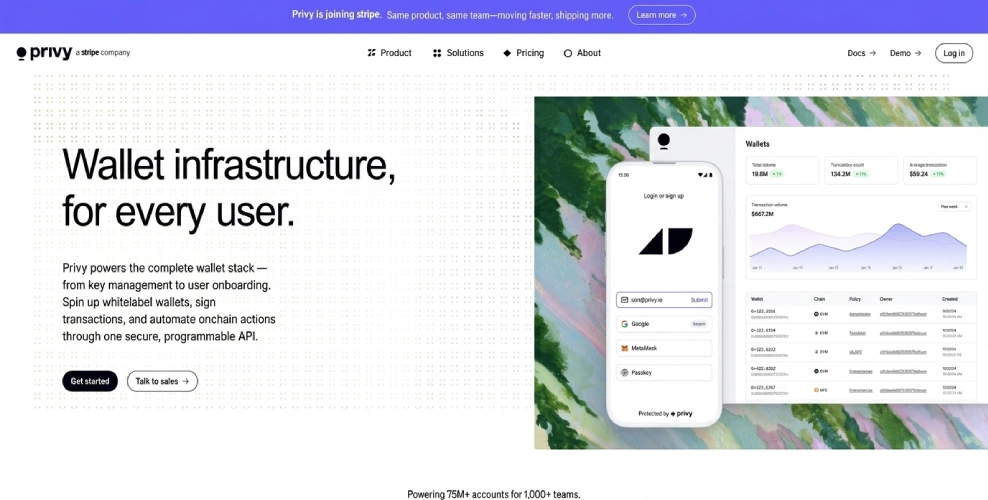
Privy (Identity and Embedded Wallets) – Simplifying Web3 Onboarding
Let’s be real-Web3 onboarding has always been messy. Wallet extensions, seed phrases, switching networks… it’s not exactly beginner-friendly. That’s where Privy completely changes the game. It allows developers to integrate login + wallet creation directly into their apps, so users can get started with just an email, phone number, or social login.
When I first tried an app powered by Privy, I didn’t even realize I was using a crypto wallet. I just signed in like I normally would-and boom, I already had a wallet ready to use. No downloads, no confusion.
Why Privy Is Useful
If you’ve ever onboarded someone into Web3, you know how frustrating it can be. Explaining MetaMask, private keys, and gas fees can easily take 20+ minutes-and most users drop off before even starting.
Privy solves this by making onboarding instant and familiar.
- Less friction for users
- Faster onboarding
- No need to build wallet systems from scratch
Key Features
- Embedded Wallets: Wallets are created automatically in apps (no extensions required)
- Different Options To Login: Email, SMS, social login, passkeys
- Instant Onboarding: Get users started in seconds
- Non-Custodial Security Users are in control of their assets
- Dynamic Key Encryption: security by use of TEEs and key sharding
- Multi Chain Support: Supports Ethereum, Solana, Bitcoin and beyond
- Gas Sponsorship: Apps can cover users fees
- Easy Integration: Use SDKs with minimal code
Pros
- Very easy to use (like you're logging into Web2)
- Eliminates the largest Web3 hurdle (wallet complexity)
- Fast onboarding improves user retention
- Strong security with modern infrastructure
- Excellent for scaling apps and remote teams
Cons
- Developers rely on third-party infrastructure
- Embedded wallets may raise transparency concerns in some cases
- Advanced users might prefer full manual wallet control
- Still gaining mainstream adoption
 Privy
Privy
Comparison Table
| Tool Name | Category | Best For | Key Strength | Limitation |
|---|---|---|---|---|
| Foundry | Development Framework | Smart contract developers | Fast testing and deployment | CLI-based, learning curve |
| Immutable Passport | User Onboarding | Beginners and gaming platforms | Easy login + wallet creation | Gaming-focused |
| Helius | Infrastructure | Solana developers | Real-time data and APIs | Solana-only |
| Composio Crypto-Kit | AI Tooling | Automation and AI agents | Web3 + AI integration | Requires technical knowledge |
| Privy | Identity and Wallets | Apps and startups | Embedded wallets and login | Third party dependency |
Conclusion
The Web3 ecosystem is evolving rapidly, and which tools you’re using today might be an indicator of how successful your project will be later. Not only the above-mentioned tools are used by thousands of people, but they are also powerful, reliable and designed for real-world applications.
These tools provide a complete collection of resources for all parts of the Web3 stack - from the development stage (Foundry) to the onboarding stage (Immutable Passport, Privy), to the infrastructure stage (Helius), and the automation stage (Composio NFT Kit). Any developer, founder, or member of a remote team can use these tools to help them develop new software more quickly, build an audience more effectively, and provide a better experience for the people using their software.