The NFT ecosystem has experienced huge growth in just a few short years, turning what began as pixelated JPEGs selling for millions into a dynamic & useful piece of the Web3 stack used for digital ownership, gaming economies, tokenizing real-world assets, brand loyalty programs, and community governance. While there are still many creative options available, there remain many difficulties for creators/developers/brands regarding the technical aspects involved with minting, managing, & scaling NFTs.
This is where the Web3 tools come into play. The correct toolset implements the ease of NFT minting (a process that transforms digital content into assets recorded on a blockchain) as well as functionality for smart contract design, automate metadata, manage royalties, provide analytics, marketplace integration, & facilitate communities.
This post will detail the top five Web3 NFT minting and management tools that every creator/developer/brand should examine for use in 2026.
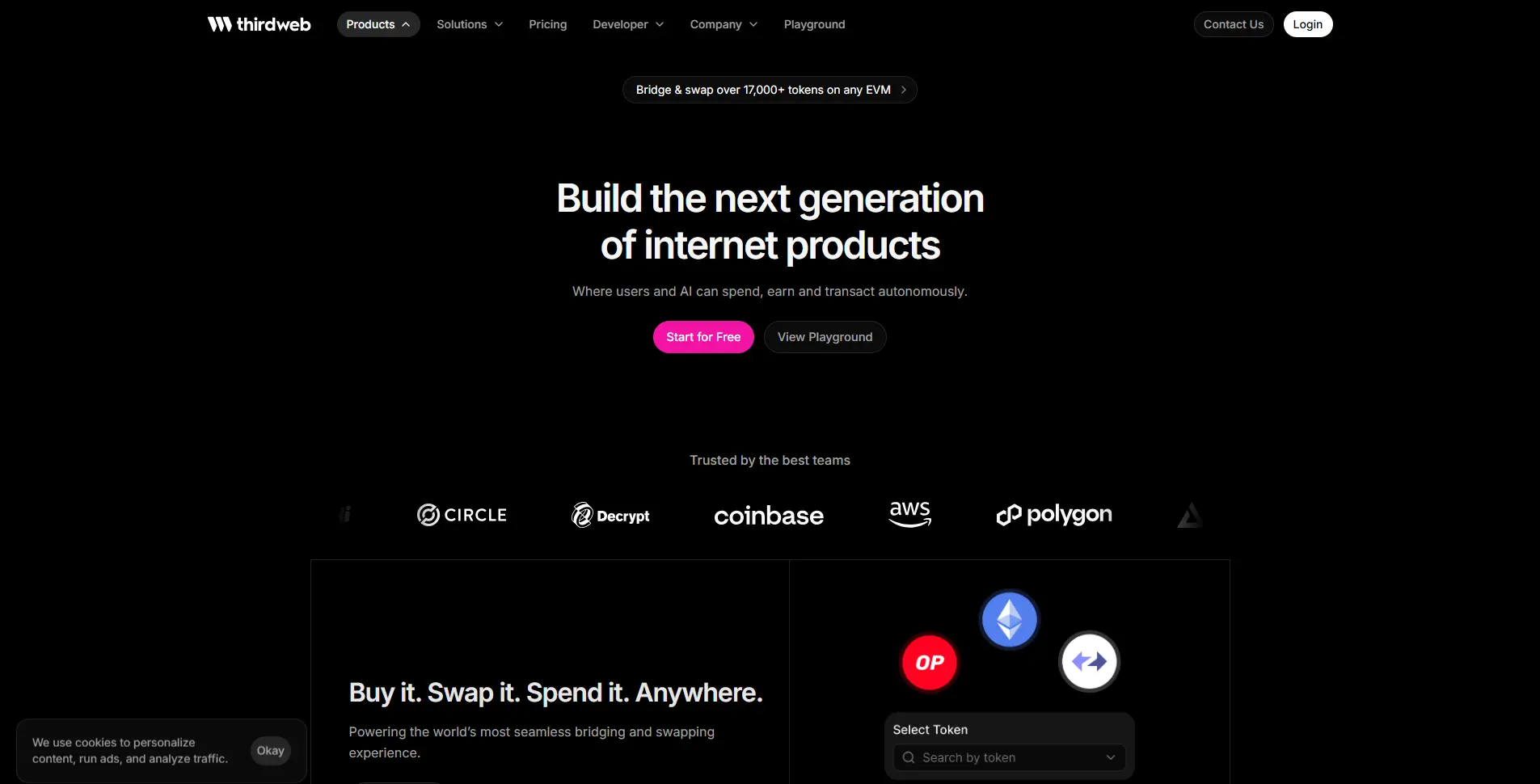
Thirdweb
Best for: Developers Building Modular Web 3 Components Without Starting from Scratch with Smart Contracts.
Today, many NFT projects require a lot more than simply pressing a button to "mint" an NFT - they require a range of features (e.g., whitelisting, dynamic pricing, drop mechanics, gas optimization, cross-chain capabilities) that typically take a developer to implement.
However, Third Web is making this much easier for developers to build, deploy and manage their smart contracts and NFT collections with pre-built modules.
Key Features:
- Prebuilt Smart Contracts: Create ERC-721, ERC-1155, and custom NFT contracts without writing Solidity.
- Drop Modules: Built-in support for allow-list drops, public minting, and delayed reveals.
- SDK & API: Integrate minting and on-chain functions directly into apps, websites, or games.
- Cross-Chain Deployments: Supports chains like Ethereum, Polygon, Optimism, and Base.
- Royalties & Permissions: Set up revenue splits and access controls.
Pros:
- Instantaneous deployment through pre-built, validated smart contracts
- Significant capability to work with complex NFT processes, such as: ED, lazy minting, and delayed reveal
- Very robust SDKs and APIs available for use by frontend developers, backend developers, or game developers
- Cross-chain capabilities eliminate lock-in to a single ecosystem
- Community has a lot of support from other developers and receives numerous updates
Cons:
- Advanced customization may still require some working knowledge of smart contracts
- Developers who prefer pure technology development may find Thirdweb's framework limiting
- Higher tier solutions for larger volume or business customers can become quite pricey.
Why It Matters
By using Third Web, creators can spend more time focusing on their design, community and product experience, and less time writing blockchain boilerplate code. The SDK and dashboard also allow complete control of live collections regardless of the type of marketplace they create or how they integrate NFTs into existing platforms.
Use Cases:
- A game studio launching an NFT weapon set with rarity tiers.
- A fashion brand issuing limited-edition digital wearables and claiming royalties on resale.
- A DAO launching governance NFTs tied to voting rights.
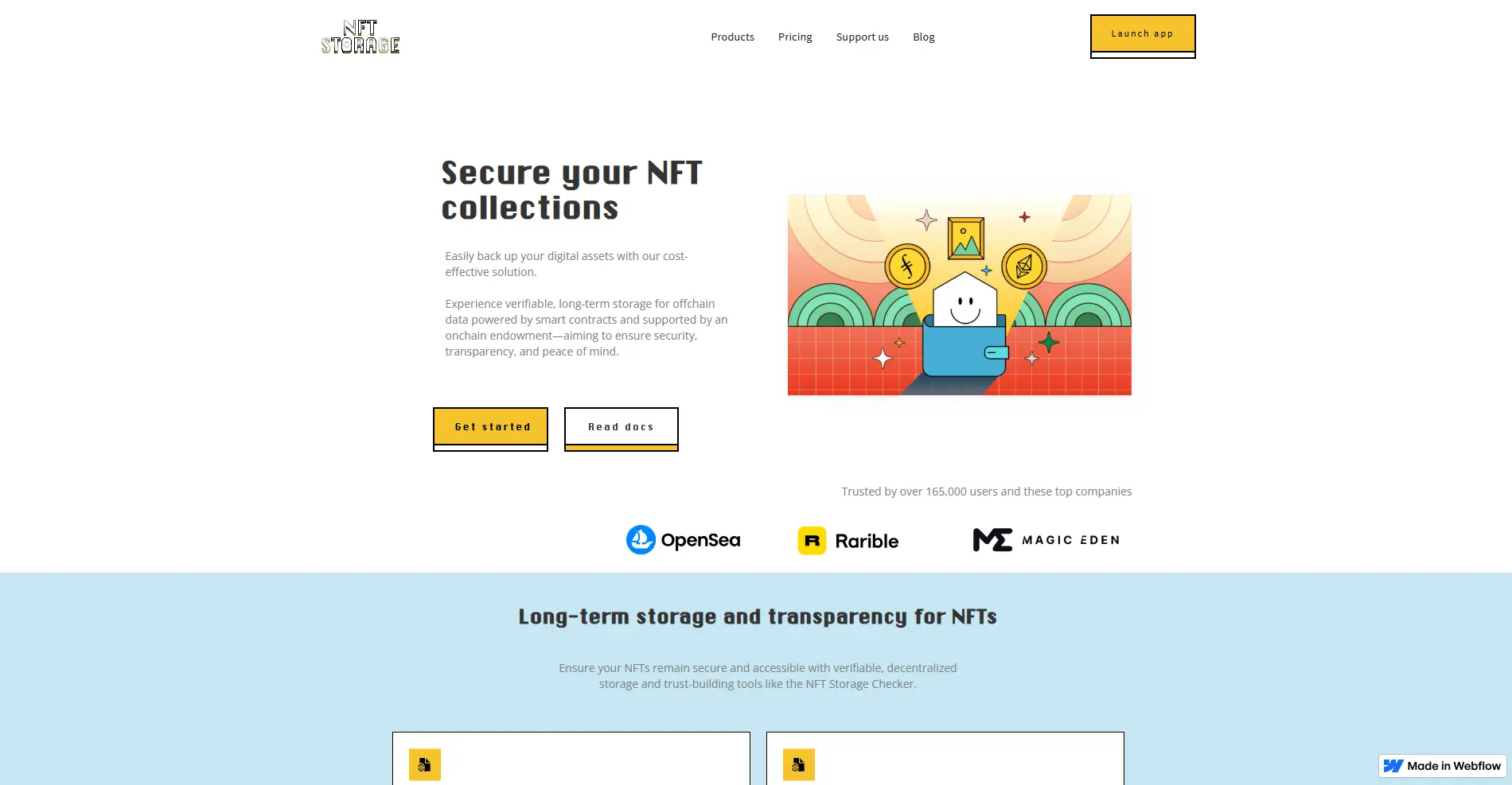
NFT.Storage & Filecoin
Best for: Storing NFT Metadata and Assets Permanently
The most significant misunderstanding in the realm of NFTs is that storing both images and metadata on a blockchain is an efficient storage solution; however, it's worth noting that this type of storage has two major disadvantages: high cost and a limitation in available space. Therefore, the vast majority of NFT projects use off-chain (traditional) servers to store their files; however, traditional servers may go down, thus ruining the integrity of their NFTs.
Consequently, there is no better long-term decentralized storage than that which is created through using a mixture of NFT.storage in conjunction with both Filecoin and IPFS (InterPlanetary File System).
Key Features:
- Decentralized Storage: Files are stored across a distributed network, not centralized servers.
- Immutable Data Hashing: Each file gets a permanent CID (Content Identifier).
- Cost-Efficient: Designed for storing large media like videos, 3D models, or high-res art.
Pros:
- Long-term NFT asset storage that is truly decentralized
- Data integrity is provided via immutability CIDs.
- Large files (video, 3D models, AR) are best suited for this storage.
- Protocol Labs backs this storage; therefore, it will be credible and long-lasting.
Cons:
- No native minting capability and no native NFT management features
- Requires to use(s) another minting platform to enhance or for mint
- Retrievable speed may vary with centralized storage
Why It Matters:
By ensuring the NFT asset remains accessible for many years after it has been minted, both the creator and collector of the NFT are protected. Because of decentralised storage:
- Metadata cannot be retroactively updated
- Galleries and marketplaces have reliable access to load data for their users
- The blockchain provides proof that the media used in the NFT is stored on permanent, tamper-proof media
Ensuring NFT assets remain accessible long after minting protects both creators and collectors. With decentralized storage:
- Metadata can’t be altered retroactively.
- Galleries and marketplaces can reliably load content.
- Blockchain proofs link to persistent, tamper-resistant media.
Use Cases:
- Art collections with detailed metadata and provenance layers.
- 3D collectible assets that require high-quality file storage.
- Utility NFTs that unlock documents or certificates.
Thirdweb Studio (Dashboard) / Pinata
Best for: Non-Developers & Community-First Creators
Some people may not want to program or use SDKs; in such cases it is ideal if they have a system that allows for easy creation of an NFT from a web-based interface. Two of the best tools for this purpose are Thirdweb Studio and Pinata, which provide creators with visual interfaces to manage their NFTs.
Thirdweb Studio
- Drag-and-Drop Minting: Create NFT collections with a user interface.
- Mint Pages: Share public mint pages with your community — no dev skills needed.
- Live Analytics: Track mint counts, wallet activity, and revenue.
Pros:
- Non-Developer Friendly – No-Code or Low-Code Interface
- Collectors have Low Friction – Built-in Mint Pages
- Analytics are Live / Built-in to Collectors’ Tokens
- Thirdweb Smart Contracts – Seamless Integration
Cons:
- Limited flexibility compared to developing your solution
- Limited options for design/UX
- Less well-suited for highly experimental NFTs
Pinata
Though Pinata is primarily used as a content management service to create, store, and distribute files on decentralised storage networks, its integration very well with NFT platforms like Thirdweb
- Pin Files to IPFS: Upload and pin media with reliability.
- Metadata Templates: Manage metadata schemas for large collections.
- Integrations: Works with tools like OpenSea, Mintbase, and smart contract deployers.
Pros
- Well-established IPFS pinning provider that has been proven to work
- User-friendly design for managing large volumes of NFTs
- Integration with most large NFT-Marketplaces
- The ability to create templates for metadata streamlines creating large amounts of NFTs
Cons
- No capability to create NFTs as a stand-alone service
- Advanced features require building an API
- You must pay to store large quantities of data on the server or use large amounts of data in terms of bandwidth.
Why It Matters
Dashboards democratise the process of creating NFTs. They allow artists, influencers, and small companies to launch NFT collections, without the need to build a development team. In addition, easy-to-use mint pages help increase the number of people who buy NFTs, especially if they are not familiar with code.
Use Cases:
- Artists launching a series of 1000 NFTs without writing code.
- Musicians creating exclusive fan tokens.
- Event organizers issuing NFT tickets.
Thirdweb Analytics
Best for: Insights, Performance Monitoring & Community Metrics
Once you mint your NFT, that's only the first step. The long-term viability of your project depends on having access to the right data, including who is minting, which are the highest performing drops, and where you generate the most volume of traffic for sales.
Thirdweb Analytics
- Built-in dashboards for sales, holders, and transaction trends.
- Real-time data updated from multiple chains.
- ROI tracking for promotions and marketing efforts.
Pros
- No setup is needed for plug and play dashboards.
- Real-time insights are obtained from any previously authorized chain.
- Great for monitoring sales/holders/drops.
Cons
- Data tools are less customizable than raw data tools. Third-party web-based projects are the best fit for this product.
- Data tools are less customizable than raw data tools.
- Third-party web-based projects are the best fit for this product.
Why It Matters
- Without analytics, you’re flying blind. These tools help you:
- Optimize future drops based on past performance.
- Understand collector demographics.
- Monitor marketplace performance and floor prices.
Use Cases:
- A project analyzing whale participation in mint rounds.
- A DAO measuring engagement of NFT holders.
- Brands tracking campaign performance across marketplaces.
.webp)
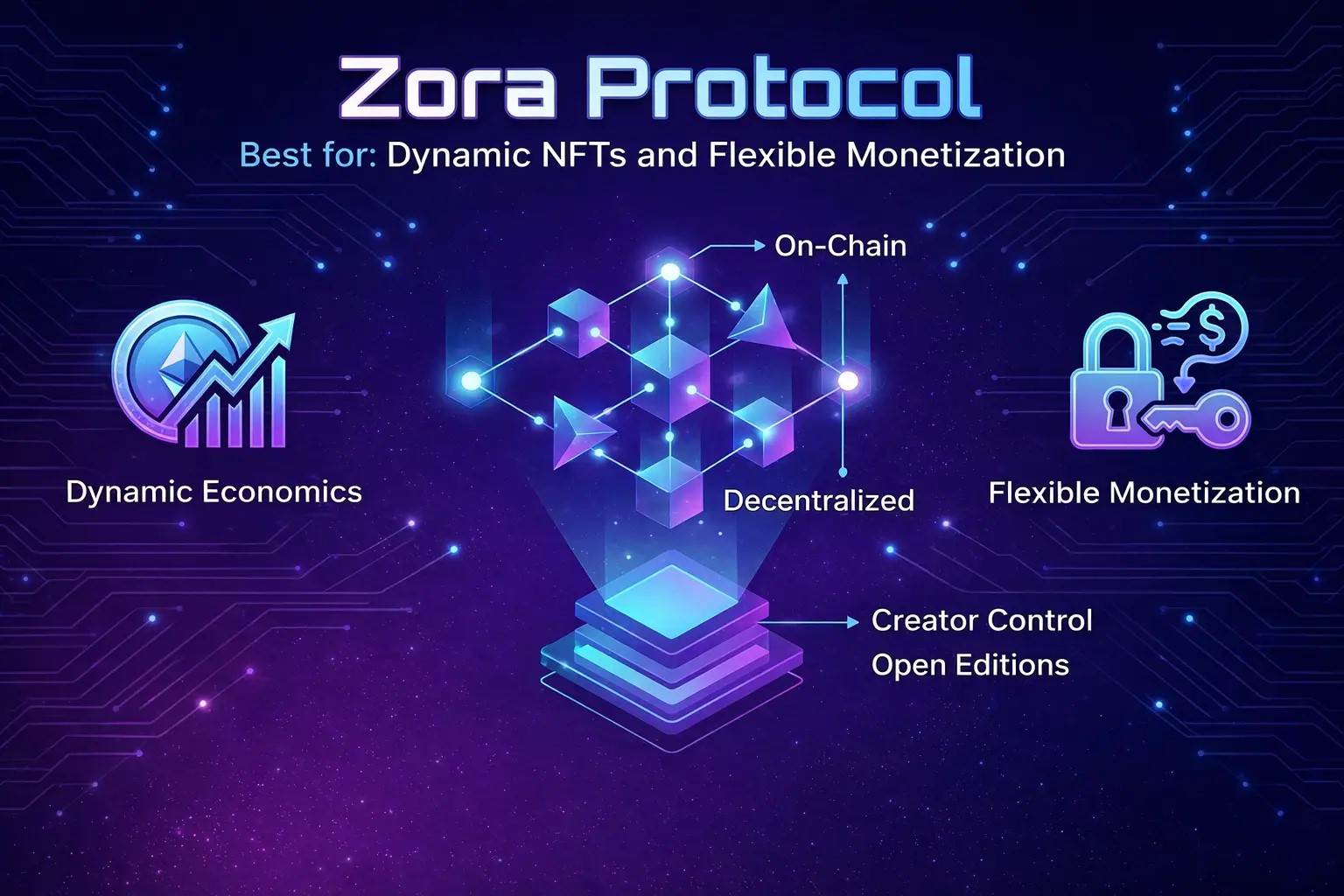
Zora Protocol
Best for: Dynamic NFTs and Flexible Monetization
The world of NFTs has changed since we created static images and collections through minting processes. Today, they have expanded to include programmable NFTs, token gating, rentability of assets, and programmable royalties. We are seeing these types of projects being developed with Zora Protocol and other similar creative development platforms.
Pros:
- Allows for complex NFT economics, including
- On-Chains Promote Decentralization & Composability
- More Control of Marketplace Behavior & Pricing Models
- Perfect for Creator-First NFT Drops
Cons:
- More Complex than Traditional NFTs
- Smaller Ecosystem than OpenSea & Similar Markets
- Requires Intermediate to Advanced Level of Web3 Knowledge
Why It Matters
- Traditional marketplaces are limited in how NFTs behave post-mint. Zora enables:
- Experiments with bonding curves (price changes over time).
- Open Editions where pricing and supply adjust dynamically.
- Integration into broader Web3 financial primitives.
Use Cases:
- Digital collectibles with variable pricing.
- Limited drops with incentives tied to on-chain events.
- NFT projects that want marketplace control without intermediaries.
Comparison Table
| Tool Name | Best For | Key Features | Blockchain Support | Skill Level | Ideal Use Case |
|---|---|---|---|---|---|
| Thirdweb | Full NFT development & management | Prebuilt smart contracts, SDKs, NFT drops, royalty splits, dashboard analytics | Ethereum, Polygon, Optimism, Base, Arbitrum | Beginner to Advanced | Developers & startups building scalable NFT platforms |
| NFT.Storage (Filecoin + IPFS) | Decentralized NFT storage | Permanent storage, content hashing, metadata immutability | Blockchain-agnostic | Beginner | Long-term storage of NFT media & metadata |
| Pinata | Easy IPFS & metadata management | File pinning, metadata templates, API integrations | Blockchain-agnostic | Beginner | Artists & creators managing NFT assets |
| Dune Analytics | NFT data & performance insights | Custom dashboards, SQL queries, on-chain analytics | Ethereum, Polygon, BNB, others | Intermediate | Data-driven NFT projects & DAOs |
| Zora Protocol | Dynamic & programmable NFTs | Open editions, bonding curves, on-chain marketplaces | Ethereum, Optimism | Intermediate to Advanced | Experimental NFT drops & flexible pricing models |
Conclusion
Creators, developers, and brands can now work together in a rich ecosystem using tools built on the Web3 landscape. If you are an artist setting up your first NFT project, or an established startup (using Web3) that is creating multiple tokenized products, the tools available (listed below) provide the support you need to launch, manage and grow with ease.
The tools listed below serve a specific purpose throughout the lifecycle of an NFT:
- Smart contract flexibility (Thirdweb)
- Decentralized storage (NFT.Storage)
- Non-developer friendly minting (Pinata/Studio)
- Performance insights (Analytics)
- Advanced economic models (Zora)