With rapidly changing technology, companies are constantly searching for innovative ways to improve their processes, increase their productivity, and reduce or eliminate manual labor from their operations. The emergence of Artificial Intelligence (AI) has positioned SaaS-based automating solutions into must-have items in many companies' business strategies. By automating tasks across marketing, sales, support, data and customer experience using AI functions along with low-code/no-code development, these solutions require less human interaction, create a pattern of consistency among tasks and produce quicker returns for numerous departments. By picking the appropriate automation solutions (regardless if you're a start-up or an enterprise), your company will save time so that your teams can spend their time on strategy and innovation and, ultimately, grow your company faster. From automatically synchronizing data to managing complicated customer workflows, SaaS-based solutions using AI technology are transforming how businesses operate in today's technologically advanced world.
Business automation tools today use AI to perform more advanced tasks than simply initiating actions or carrying out rules. These powerful tools enable you to connect all of your applications together in order to create a seamless workflow for ongoing product delivery. They also provide intelligent processing so you don't have to worry about making costly errors due to manual operations or having inefficient communication with colleagues. By making use of this technology, companies gain real-time insight into how their business functions and ultimately create a higher level of satisfaction among their customers by providing them with an improved product experience. In this article we will outline 5 of the most popular AI SaaS solutions available in today's marketplace that have been proven effective by teams around the globe to increase operational efficiencies and result in faster business results.
Why These 5 SaaS Tools Are the Best for Business Automation
These five automation tools (HubSpot, Coupler, Tidio, AskYura, and Workato) were chosen for their ability to fully automate essential business processes across departments such as sales, marketing, support, analytics, and workflow automation. Each of these platforms combines AI-powered capabilities and user-friendly interfaces with integration capabilities and scalability, enabling small teams and enterprises alike to reduce the amount of manual work they have to do, combine their data, and achieve faster results. Whether you need to automate your customers’ conversations, ensure your data is synchronized across systems, construct intelligent workflows or improve your CRM pipeline, these tools will address all of your automation needs with proven, effective tools and functionalities.
HubSpot - All-in-One Automation Platform
HubSpot is an all-in-one Customer Relationship Management system. HubSpot automates processes related to Marketing, Sales, Customer Service, and CRM. By providing your organization with a workflow builder, AI capabilities, and various integrations, HubSpot will help you automate routing leads to the appropriate person, follow up with leads and existing customers, create support tickets to track customer inquiries or issues, ensure data is synced between systems, and engage with customers. Most importantly, HubSpot allows you to manage and track your inbound marketing activities, sales pipelines, and customer successes in ONE location.
Pros
- HubSpot is a single source of data for all divisions of a company that can use automated workflows.
- Interoperability with applications & marketplaces allows you to expand your use of HubSpot to fit your business needs.
- AI capabilities reduce the time required for repetitive tasks and help with content creation and/or email communication.
- HubSpot grows from supporting small businesses to supporting large enterprises.
Cons
- The costs associated with adding enterprise level advanced feature capabilities could be prohibitive.
- There are more in-depth learning curves with some of the advanced automation capabilities.
- There are features that may overlap causing complexity in terms of the use of the system.
- Some advanced AI capabilities are not available to every subscription level.
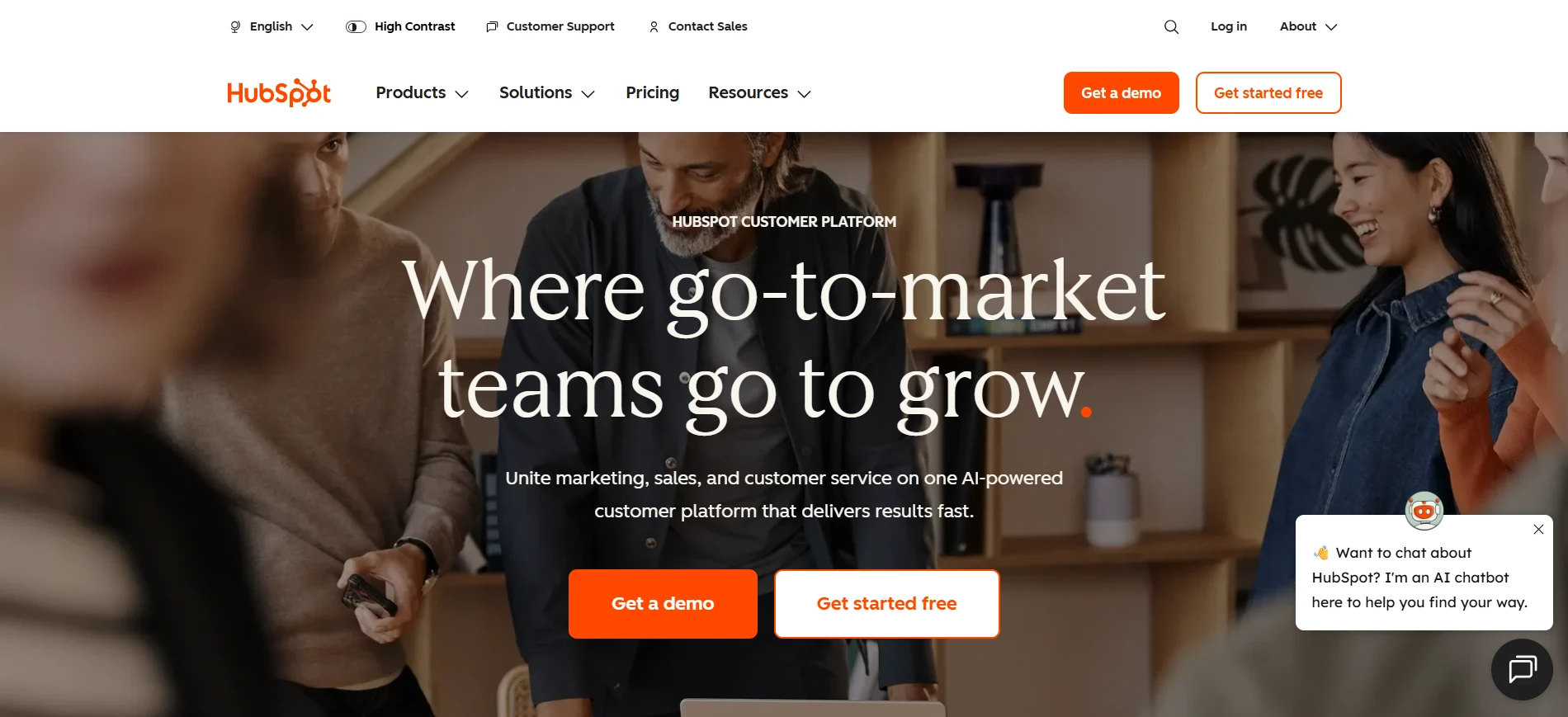 https://www.hubspot.com/
Coupler - No Code Data Integration and Automation
Coupler.io is an automation platform that automates the process of collecting and integrating data from several different applications (e.g., CRMs, spreadsheets, analytics tools) into spreadsheets, BI tools, or data warehouses. It allows users to automate importing data from various sources with scheduled imports, refreshing data on a given schedule, and updating dashboards, which would otherwise take a significant amount of time to do manually.
Pros
- Easy to use without any programming experience.
- Connects with numerous sources (i.e., CRMs or spreadsheets).
- Allows you to schedule your automated updates and pipelines.
- Provides teams with reliable data and reporting.
Cons
- Limited in how much transformation can be done on complex data structures.
- Cost will increase as usage and connectors increase.
- Does not provide full workflow automation; it is strictly a data tool.
- Don't expect real-time integration with some data sources.
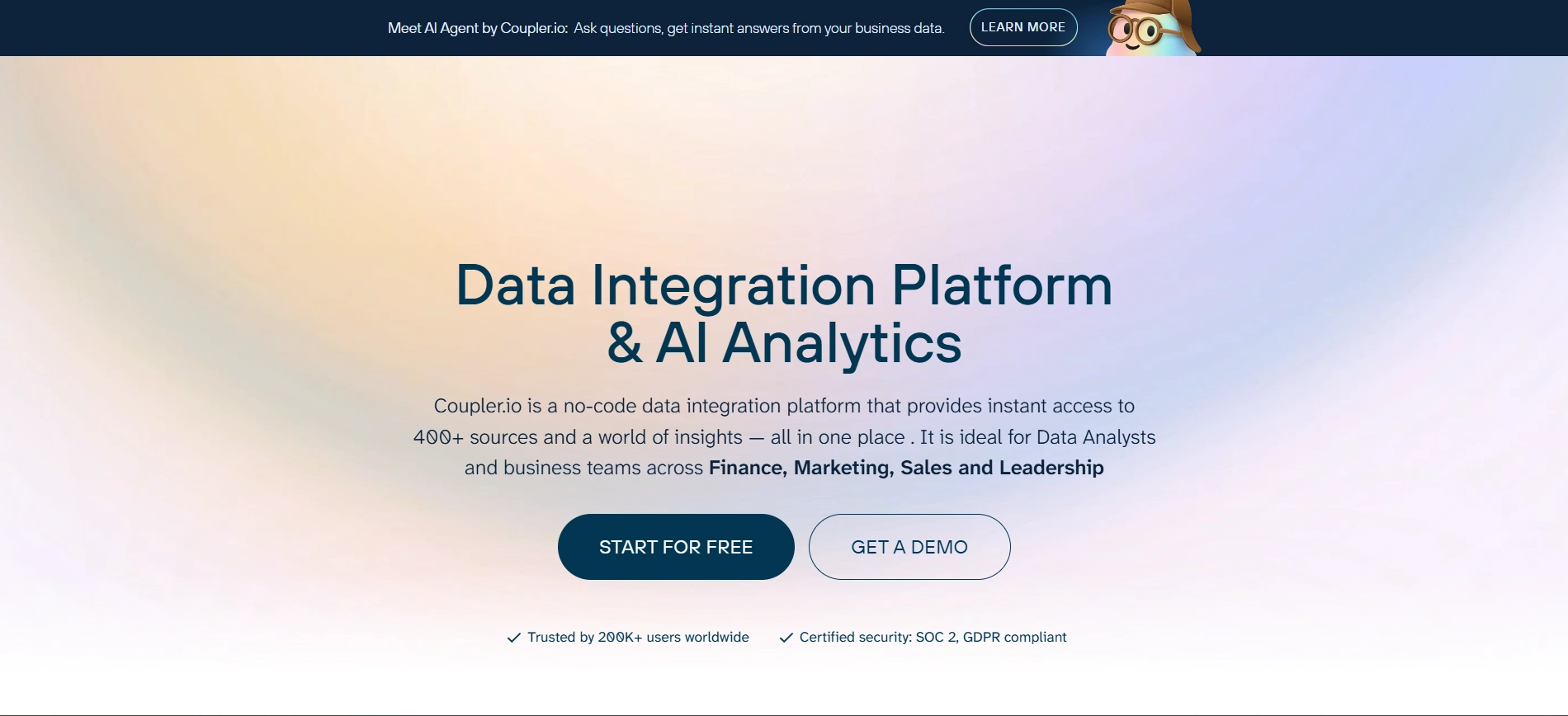 https://www.coupler.io/
Tidio - AI Chatbot and Customer Support Automation
An organization called Tidio offers automated chat support and advanced technology to improve customer relations for most companies, especially those in online retail. The chatbots developed by Tidio can assist customers by providing answers to FAQs, sorting incoming support requests/tickets, and answering ZIA questions while they're engaged in eCommerce Zoom. Similarly, Tidio chatbots integrate seamlessly with the following popular shopping platforms: Shopify and WooCommerce.
Pros
- Tidio combines an AI-powered chatbot that can assist clients while also allowing the -client to speak with a live representative via the same platform.
- Because of its strong roots in eCommerce
- Tidio also allows retailers to automate many of their support operations — thereby reducing the workload on their staff, saving time and ultimately reducing customer support expenses.
- Easy to Set Up – Simple installation with Shopify, WordPress, Wix, and other platforms.
Cons
- There is likely an added cost for advanced Tidio functionality
- integrations are not available for most non-eCommerce related applications
- Tidio is best suited for traditional customer service / support type operations.
- Tidio does not offer in-depth analytic and reporting capabilities.
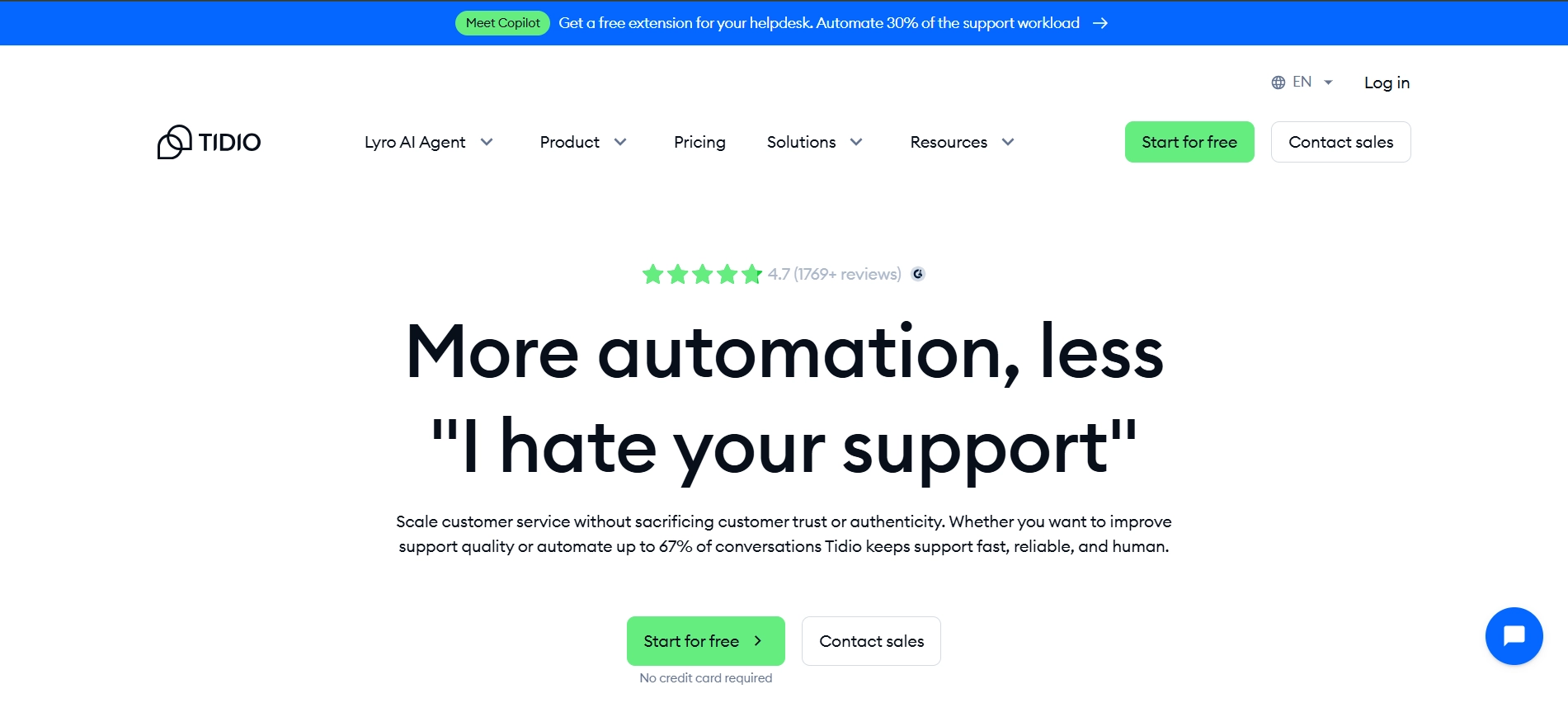 https://www.tidio.com/
AskYura - Conversational AI for Task Automation
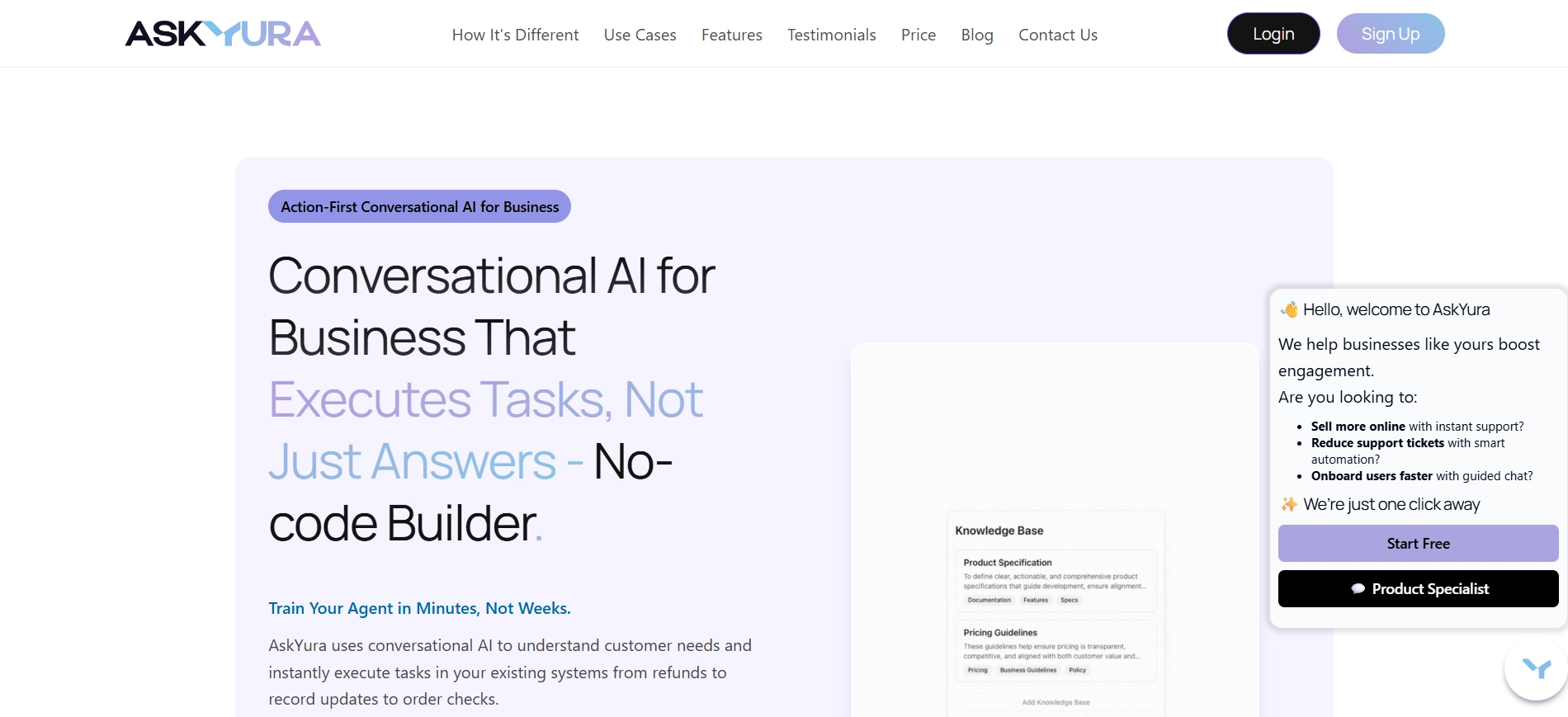
AskYura is a conversational AI solution that takes conversational bots a step further and executes real-world business processes such as processing refunds, updating records, managing orders, and providing customer service with instructions in plain English. This technology automates ~80%of routine support tasks and processes without complicated configuration.
Pros
- Executes real business processes — not just answering questions
- Simple configuration and customer-service instructions with no-code in plain English
- Can be used across all areas of customer support and operations
- Can integrate easily with existing CRM and support systems
Cons
- Relatively new and with fewer public reviews
- Focus is web chat rather than multichannel
- May require technical configuration for some advanced customization
- Primarily designed for customer support/operations vs. full enterprise ERP automation.
 https://askyura.com/
Workato - Enterprise Automation and Integration
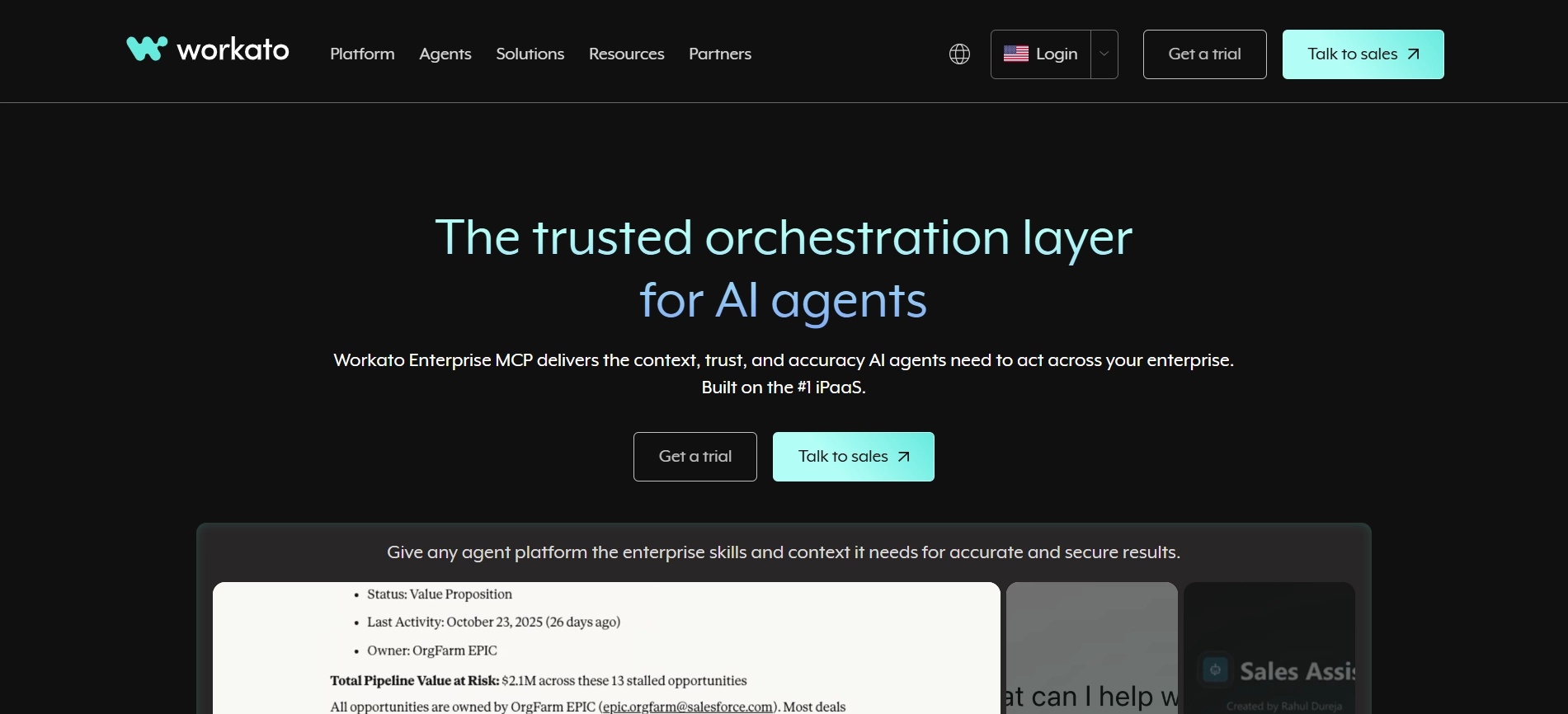
Workato is a platform that integrates and automates business processes across disparate applications and provides enterprise-level security, governance, auditing, etc. Using AI orchestration, agent insights, and user controls, Workato is suited to large organisations requiring both reliable automation and a secure environment across their entire enterprise.
Pros
- Connects many (hundreds) of applications with pre-built automation “recipes”
- Provides strong enterprise-level security, governance and auditing controls
- Supports technical and non-technical users
- Scales to provide enterprise-level use cases.
Cons
- Complex workflows have a steep learning curve in terms of how to create them
- Pricing often based on how much you use/work with it
- Large integrations take longer to set up
- New users may find the documentation to be overwhelming
 https://www.workato.com/
Comparison Table
| Tool | Primary Use | Ideal Users | Advantages | Disadvantages |
|---|---|---|---|---|
| HubSpot | Unified CRM & Marketing Automation Platform | Small to Large Businesses | Centralized customer data, highly automated systems, extensive ecosystem of apps | Advanced features also have a learning curve and require mastering |
| Coupler | No-code data integration between apps and data warehouses | Industries/services: Businesses needing analytics & reporting without coding | Easy to set up and schedule, and it supports multiple data platforms | No end to end automation, limited data transformation (free trial) |
| Tidio | AI chatbot and customer services assistant for website | eCommerce store owner | Integrate with Shopify & WooCommerce websites with AI + Human Agents | Limited to eCommerce, lacks Best advanced reporting |
| AskYura | Conversational Workflows between Customers and Support Teams | Companies Using Chat-Based Customer Support | Real time actions, no code setup and AI actions | New brand, only uses web chat, no public feedback |
| Workato | Enterprise grade integration and automations platform | Large Organization | Highly scalable workflow, strong governances, advance integrations | Steep learning curve, use-based and expensive pricing |
Conclusion
As speed, accuracy, and scalability define success in today’s business world, automated SaaS solutions powered by AI have become essential instead of optional. The platforms mentioned in this article – HubSpot, Coupler.io, Tidio, AskYura, and Workato – serve a unique purpose in terms of helping companies automate processes, decrease the amount of manual tasks employees perform, and increase efficiency overall. Each of these tools automates various aspects of business operations from sales, marketing, and customer service to the integration of critical systems and data, to helping companies manage complex workflows across multiple departments.
The HubSpot platform is an example of a complete CRM that provides marketing, sales, and service automation all under one roof; therefore, making it an excellent fit for growing businesses who want to be able to manage everything from one location. Coupler.io makes it easy to automatically update your data, thus allowing you to generate accurate reports without having to do it manually. Tidio helps improve the customer experience through AI-powered chatbots that automate customer service interactions, especially for e-commerce companies. AskYura introduces a new generation of conversational AI that not only responds to customer requests but actively completes tasks, which drastically reduces operational costs. Finally, Workato provides automation and integration solutions that are enterprise-grade and allow large organizations to connect their various systems, applications, and teams.
To determine which (automated solution) will work best for your organization you first need to consider three factors that are key to your successful implementation of automation; the size of your organization; your organization's goals; and the complexity of your organization's operations. Companies that are larger than others can benefit from utilizing several different tools that can perform specific functions or use one tool designed to perform many functions. Choosing an automated solution that uses Artificial Intelligence (AI), allows your organization to enable employees in decision making, develop new ideas/products/services, and keep customers happy to build long-term, sustainable growth within an ever-changing and competitive environment.