DNS management tools play a significant part in making sure that applications continue to perform with speed, security, and availability at all times. The major tools for DNS management include Cloudflare DNS, Amazon Route 53, NS1, Google Cloud DNS, and Azure DNS.
Why are these tools in the top five?
DNS management tools are critical in ensuring the website and online applications are always fast, safe, and always accessible. The role DNS management services play is much more significant than just pointing the domain name to the IP address.
- Faster Website Performance
- High Availability and Uptime
- Improved Security
- Easy Domain and Record Management
- Scalability for Growing Businesses
- Better Traffic Control
- Seamless Cloud Integration
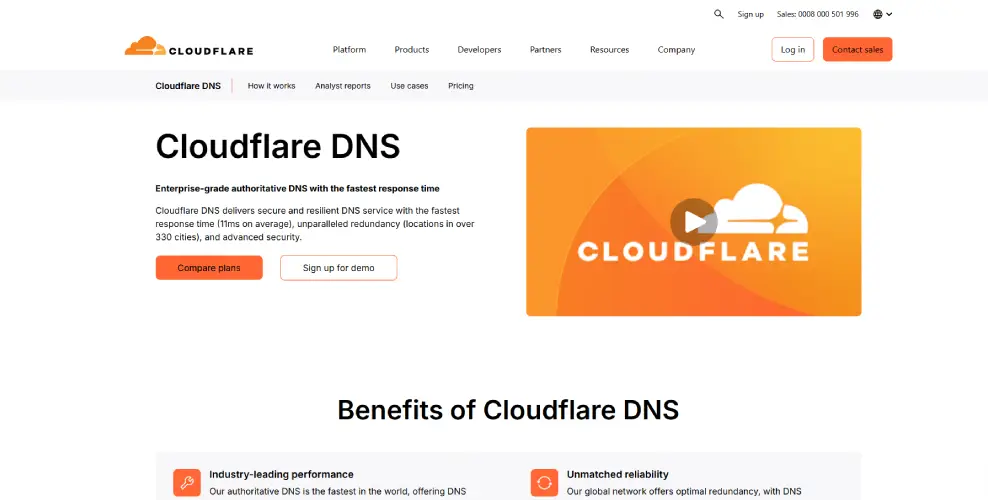
Cloudflare DNS
Cloudflare DNS is a very popular cloud-based DNS management service in the world due to its speed, reliability, and effectiveness in terms of DNS security. There are several benefits of using Cloudflare DNS on the website because it not only improves the loading speeds of the website but also provides a safeguard against attacks, as well as ensures that the website always remains up, regardless of the traffic it gets.
What Is Cloudflare DNS?
Cloudflare DNS is a Domain Name System (DNS) service created by Cloudflare, a “company trusted by more than a million websites worldwide.” The DNS service is much like the “phonebook of the internet,” linking domain names (such as yourwebsite.com) to their “correct IP addresses, so servers can communicate with and serve websites and online applications to users.”
What Cloudflare does differently is how fast and secure it does it. While your website would have to wait for a lookup, Cloudflare will immediately connect visitors to your website from its enormous global network.
Key Features:
- Ultra-Fast Performance
- Advanced Security
- 99.99% Uptime
- Privacy-Focused
- DNS Analytics
Pros:
- Powerful free plan
- Fast and reliable DNS performance
- Excellent protection against online threats
- User-friendly dashboard
- Privacy-first design
Cons:
- Some advanced features require a subscription-based plan
- Can be a bit complex for beginners
- May conflict with certain third-party plugins
Amazon Route 53
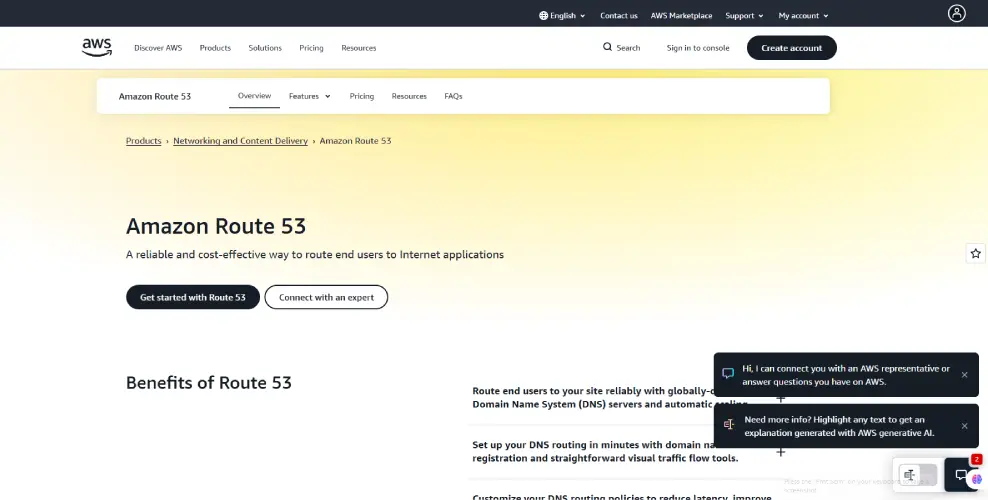
Amazon Route 53 is a highly elastic, cloud-optimized DNS solution that runs on the Amazon Web Services platform. The solution enables companies to manage domains, direct traffic, and deliver outstanding worldwide performance.
What Is Amazon Route 53?
Route 53 is a highly reliable and fully scalable DNS web service for mapping Internet requests to applications running on AWS or elsewhere. Route 53 translates a domain name to a machine-readable IP address.
Route 53, developed on world-class infrastructure from AWS, claims low-latency DNS resolution and high reliability. The easy integration with existing AWS services also makes it a preferred option for businesses that are working on AWS.
Key Features:
- DNS Global Network
- Health Checks & Monitoring
- Domain Registration
- AWS Integration and Its Importance
- High Availability & Security
Pros:
- Quick and stable DNS performance
- High level of routing flexibility
- 100% uptime SLA
- Extensive AWS Integration
Cons:
- Simple learning curve for new AWS users
- Can be expensive when implemented on a larger scale
NS1
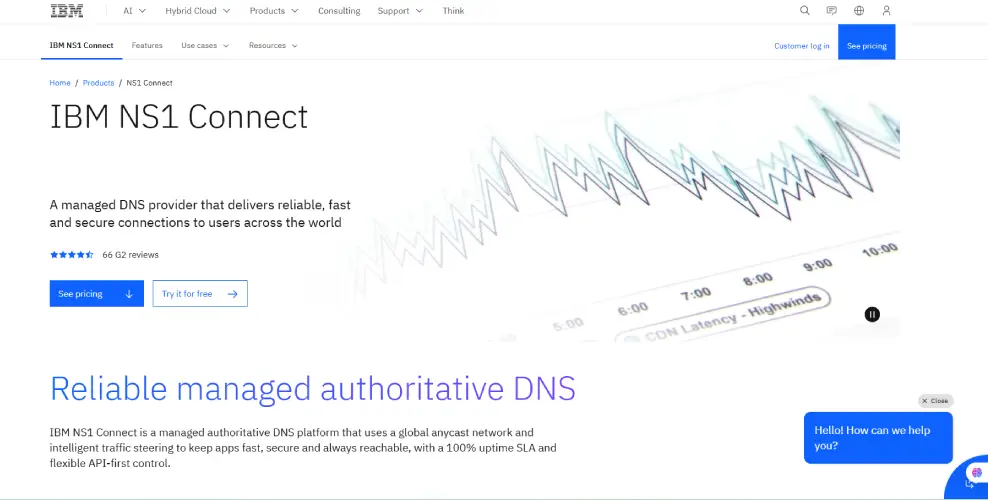
It enables enterprises to distribute and optimize traffic across internal and external data centers with a high level of control, as well as providing advanced, real-time analytics that deliver faster web page load times, better availability, and improved end-user experiences. With strong traffic management and real-time analytics, NS1 is a can't-miss option for those depending on online performance.
What is NS1?
NS1 is a managed DNS company that focuses on performance-based and data-driven DNS routing. While most traditional DNS providers set up their records based on basic rules, NS1 does so using real-time network data to make smarter decisions on where to route user traffic.
Key Features:
- Intelligent Traffic Steering
- Advanced Failover
- Real-Time Data Feeds
- Global Anycast Network
- Strong API Integration
Pros:
- Highly intelligent traffic routing
- Excellent global reliability
- Great automation support
Cons:
- More complex setup
- Higher cost compared to entry-level options
Google Cloud DNS
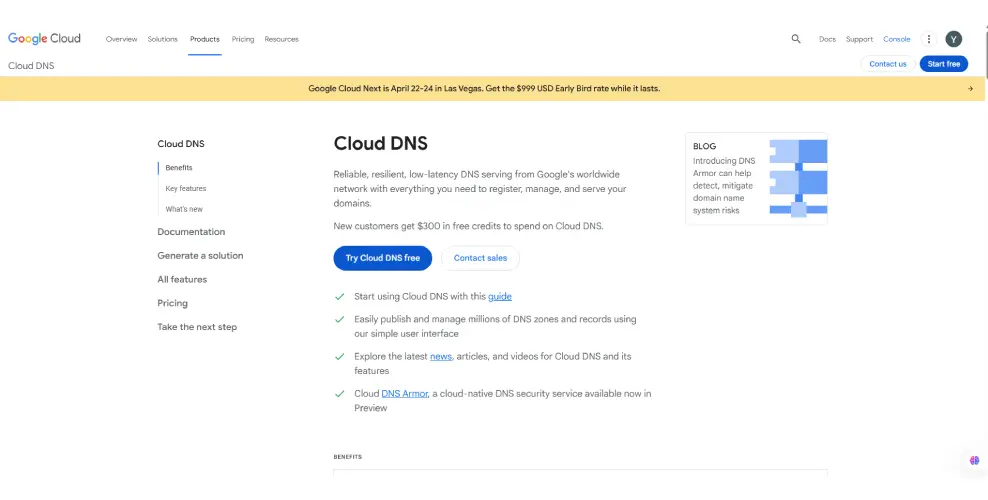
Google Cloud DNS is an accelerated, secure, and dependable DNS service powered by Google’s worldwide network. Google Cloud DNS also enables organizations to handle domain names at low latency, high availability, and simplified connectivity to any Google Cloud service.
What is Google Cloud DNS?
Google Cloud DNS is a managed authoritative Domain Name System (DNS) service running on the same infrastructural platform Google uses in its operations. The service enables you to manage your DNS resource records with a high level of performance and reliability. It is intended to be perfectly integrated with Google Cloud Platform (GCP), and it is also capable of managing the DNS for the workloads running on any other platform.
Key Features:
- Global Anycast Network
- High Availability
- Scalability
- DNSSEC Support
- Pay-as-You-Go Pricing
Pros:
- Backed by Google’s infrastructure
- Simple and efficient interface
- Affordable for growing projects
Cons:
- Fewer advanced routing features than competitors
- Works best for Google Cloud users
Azure DNS
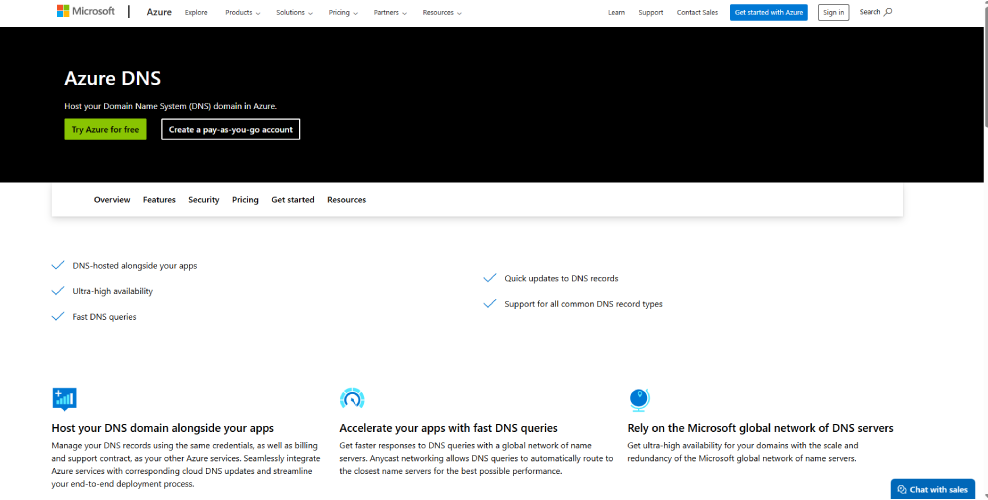
Azure DNS is a managed hosting platform for your domains in the DNS world in the Microsoft Azure platform. You can host your domain names on the global infrastructure of Microsoft Azure, so your domains are always available, secure, and perform well, and all this is done through the same login and payments as your current Microsoft Azure subscriptions.
What Is Azure DNS?
Microsoft Azure DNS is a reliable and highly available cloud hosting service for domains in the DNS world, providing fast and reliable resolution performance based on the worldwide presence of the Microsoft Azure infrastructure. It is based on the same robust infrastructure used by Office 365, Outlook.com, and Azure.
Key Features:
- Global Anycast Network
- Private DNS Zones
- Role-Based Access Control (RBAC)
- DNSSEC Support
- Automation and API Integration
Pros:
- Excellent Azure integration
- Enterprise-class security solutions
- Both public and private DNS are enabled
Cons:
- Limited routing customization
- Best suited for Azure users
Comparison
| DNS Tool | Best For | Key Strengths | Security Features | Ease of Use | Price |
|---|---|---|---|---|---|
| Cloudflare DNS | Small to large-scale businesses, developers, e-commerce | Ultra-fast performance, global CDN, DDoS protection | DDoS protection, DNSSEC, privacy-first | Very easy | Free & paid plans |
| Amazon Route 53 | AWS-based applications, enterprises | Advanced traffic routing, high availability | DNSSEC, health checks, AWS security | AWS learning curve: Moderate | Pay-as-you-go |
| NS1 | Enterprises, SaaS platforms | Smart routing of traffic intelligently using data | Advanced monitoring, access control | Complicated | Premium pricing |
| Google Cloud DNS | Google Cloud customers, startups | Scalability, reliability, Google infrastructure | DNSSEC, IAM controls | Easy | Pay-as-you-go |
| Azure DNS | Azure-centered organizations | Enterprise reliability, out-of-the-box Azure integration | DNSSEC, RBAC, private DNS | Moderate | Pay-as-you-go |
Conclusion
It is important to select the best DNS service to ensure optimal speeds, availability, and security on your website or application. Cloudflare DNS is an optimal choice for speed and security, Amazon Route 53 is the best choice for routing, NS1 is an intelligent traffic solution, Google Cloud DNS is an optimal solution on the Google Cloud platform, and Azure DNS is optimal for businesses on Microsoft Azure.
Quick Summary
- Best Free Option: Cloudflare DNS
- Best for AWS Users: Amazon Route 53
- Best for Intelligent Traffic Routing: NS1
- Best for Google Cloud: Google Cloud DNS
- Best for Microsoft Azure: Azure DNS